
Benefits of e-SIM Card: Pros, Cons, India Guide
The benefits of eSIM card include faster QR-code activation, multiple network profiles, improved security, and easier international travel. While limited device support remains a challenge in India, eSIM technology offers a more flexible and convenient alternative to traditional physical SIM cards.

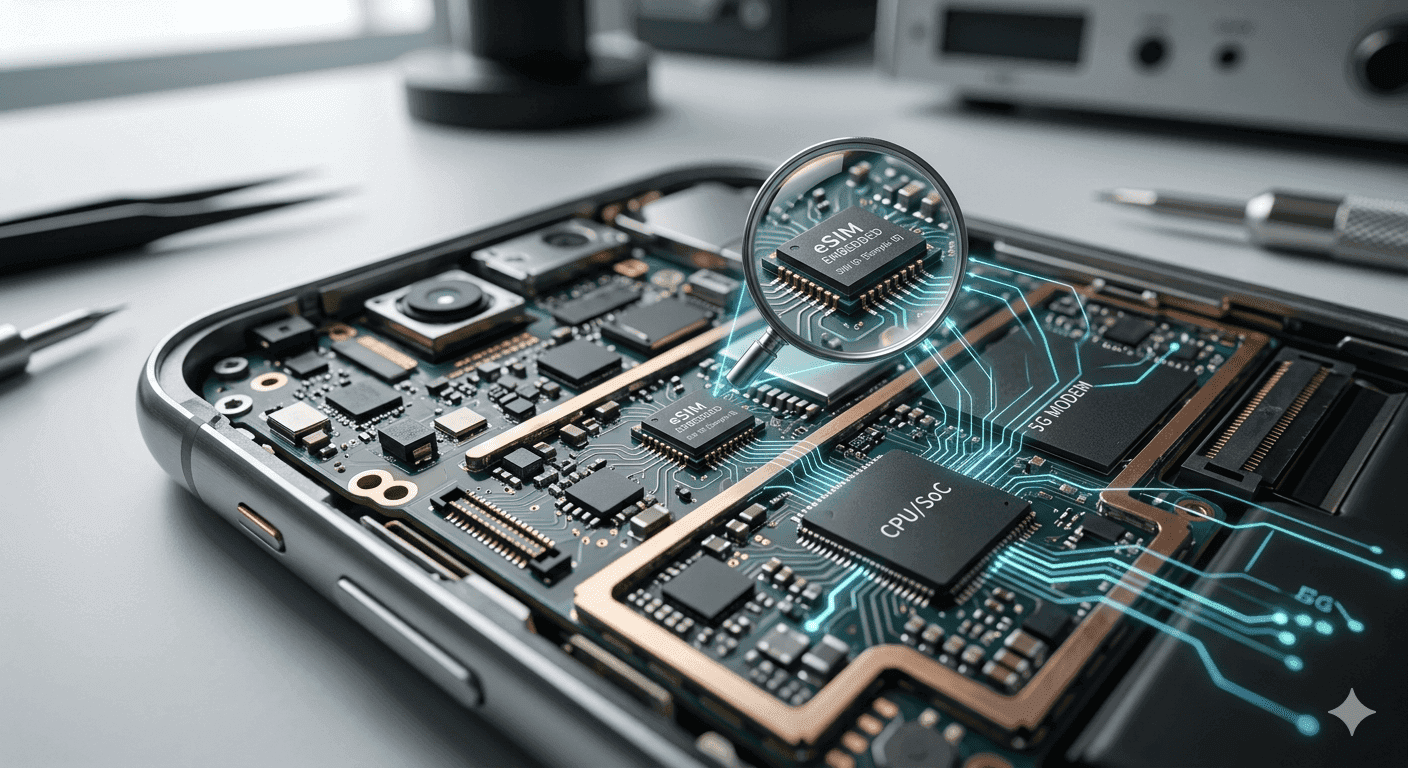
TL;DR The benefits of e-Sim card are strongest for travellers and people who want QR-code activation, multiple network profiles, and better security, while the main drawback is limited phone support in India.
Why e-SIM Matters for Everyday Mobile Use
e-SIM technology replaces the removable SIM with a digital profile built into the phone, and that changes how you activate and manage mobile connectivity. Instead of inserting SIM cards into a tray, you scan a QR code and set up service through device settings. That makes the benefits of an e-SIM card feel practical right away, because the connection lives inside the device instead of in a tiny plastic card you can misplace.
An e-SIM can store multiple network profiles, so one phone can handle work and personal lines without constant swapping. The digital world has made this kind of flexibility normal, and e-SIM fits that shift cleanly. It also points toward the future of mobile service, where setup is faster and less dependent on physical hardware.
The other reason people care is simple: it removes friction. You do not need to hunt for a tray pin, wait for a replacement card, or worry about losing a card during a trip. For many users, that is the real advantage of e-SIM technology, not the technology itself.
Why the shift matters
e-SIMs can be activated by just scanning a QR code, and they can also be activated remotely. In practice, that means a carrier can provision service without handing you a physical SIM card. If you have ever needed mobile service the same day for a work trip or a fresh number, that speed is hard to ignore.
The setup also fits how people already use phones. You log into an account, open device settings, and add a plan much like adding an app. That is why e-SIM services feel more natural on a smartphone than a removable card ever did, and why they are a simple step toward easier setup.
Cost and Pricing Overview of e-SIM Plans and Devices
The service side is usually inexpensive. e-SIM India starts with unlimited calls and 5G/4G speed, and activation is mostly done without any costs incurred in India. That makes e-SIM attractive for backup numbers, short trips, and temporary use cases where you do not want a long commitment.
The hardware side is where the real money goes. A phone like the Samsung Galaxy S26 Ultra or the Apple iPhone 17 costs far more than the activation itself, so the price decision is mostly about the handset, not the profile. If you already own a supported phone, the economics are much easier to justify, and the benefit becomes clearer.
What the low entry cost means
A cheap entry plan changes how people think about mobile service. If you only need connectivity for a trip or a work project, starting at is easier to accept than paying for a long-term plan you will barely use. That is one of the most practical e-SIM benefits for everyday users.
It also helps people who want a second line without committing to another physical card. You can keep your main number for banking and SMS while using the second line for data-heavy tasks like Google Maps, Zoom, or Microsoft Teams. That separation is useful when you do not want work and personal traffic mixed together, especially for IoT use cases that need a dedicated connection.
Market context
The market is still growing, with projections reaching 7 Million by 2034. At the same time, only 10-15% of smartphones in India support e-SIMs, which shows the gap between demand and real-world access. That gap explains the current pricing story.
The service is affordable, but the compatible phones are still mostly premium. For many buyers, the benefits of e-SIM card become compelling only after they already plan to buy a supported phone. This is also why IoT adoption can look more practical than consumer adoption in some cases.
- Entry plans can be cheap enough for short trips.
- Activation is mostly free in India.
- Premium phones carry most of the current e-SIM support.
- The phone often costs far more than the plan.
Drawbacks and Limitations of e-SIM Technology
e-SIM card disadvantages are mostly about access and recovery, not the idea itself. In India, support is limited to premium phones, so many users cannot use the feature even if they want the convenience. Since that keeps e-SIM from being a global replacement for the traditional SIM card, the limitation is less about design and more about availability.
The second issue is that switching can be less straightforward when something breaks. If you lose the phone or reset it, restoring the profile may involve carrier verification or a fresh QR code. A physical SIM is still easier to move between phones in an emergency, since you can remove it and insert it quickly.
Compatibility is the main barrier
If your phone does not support e-SIM, there is no simple software fix. That is why discussions about e-SIM benefits on Reddit often turn into compatibility complaints. The feature can be excellent and still useless for a large share of consumers if the handset ecosystem is not ready.
This also explains why the feature shows up in higher-priced models first. The Samsung Galaxy S26 Ultra at ₹124,999 and the Apple iPhone 17 at ₹82,900 both support it, while the Google Pixel 10A is among the e-SIM-compatible phones available in India. Even then, the pool of supported devices is still much smaller than the broader smartphone market.
Recovery and transfer friction
e-SIMs can be activated remotely, which is convenient, but that same setup can slow recovery when you change phones. You may need carrier help, a new QR code, or extra verification before service comes back. That is a reasonable trade-off for many users, but not for everyone.
If you move between phones often, a physical SIM still feels simpler. You can remove it, insert it, and keep going. With e-SIM, the process is cleaner when everything works and more annoying when it does not.
Security is better, but not magic
e-SIM technology offers enhanced security compared with traditional SIM cards, and it is less prone to physical damage, loss, or theft. That said, losing the phone itself is still a problem, because your line is tied to the device. In a banking-heavy setup, recovery speed matters just as much as security.
A practical example is SMS-based authentication. If your number is tied to UPI, Gmail, or banking alerts, you want fast access after a reset or replacement. e-SIM can handle that well, but only if your carrier support is smooth.
- Unsupported phones cannot use e-SIM at all.
- Recovery after a reset can take extra steps.
- Emergency swaps are easier with a physical SIM.
- Carrier support quality matters more than many buyers expect.
Comprehensive Benefits of e-SIM Cards for Users
e-SIMs can be activated by scanning a QR code, they can store multiple network profiles, and they let users switch to e-SIM or switch between carriers without physically swapping SIM cards. That combination is why the hardware feels strongest in daily use, not just on spec sheets. It removes small tasks that used to waste time.
The big win is flexibility. You can keep your existing phone number while using a different data plan, which helps if you work across multiple apps and need one line for SMS and another for data. It also makes it easier to switch to e-SIM when you want a simpler setup without changing devices or handling a physical card.
Faster activation and easier switching
e-SIM technology lets you activate a cellular plan or switch plans without a physical SIM card. In many cases, that means you can go from purchase to connectivity the same day. For anyone who has waited around for a replacement card, that speed is a real improvement.
The same advantage shows up when you change carriers. You do not need to open the tray, move cards, or worry about losing the tiny piece of plastic. The process is simpler, and for most users, that means fewer chances to mess it up.
Travel and roaming control
Travelers get some of the clearest benefits because e-SIMs provide seamless connectivity and can work in multiple countries. You can add a local SIM for data while keeping your home number active, which is useful for calls, OTPs, and email access. That is a cleaner setup than carrying a stack of cards in your wallet.
It also helps you avoid accidental roaming charges. If you manage the domestic SIM carefully and use a travel profile when needed, you can keep costs under control. That is one of the most practical advantages of e-SIM for frequent flyers and remote workers.
Design and sustainability
e-SIMs take up less space in devices, which gives manufacturers more room for other features. That matters because internal space is always limited in modern phones. Less space taken by a tray and card slot can help with design decisions elsewhere.
There is also a measurable environmental angle. e-SIMs reduce carbon emissions by nearly 46% compared with physical SIM cards. That will not matter to every buyer, but it does make the technology easier to defend in the long run.
- You can activate plans remotely without visiting a store.
- You can reduce the risk of losing or damaging a card.
- You can avoid buying multiple cards for international trips.
Digital convenience
e-SIM is best understood as a shift from physical handling to digital convenience. It lets users activate plans by scanning a QR code, store multiple network profiles, and switch between carriers without swapping SIM cards. That makes it a modern solution for connectivity in the digital world.
The core idea is simple: instead of treating the SIM as a removable part, the phone treats it as a built-in profile. That is why e-SIM services feel more natural on a smartphone than a tray-based setup. It also makes it easier to manage an email ID tied to your number, especially when you want to keep everything in one device.
Activation and control
At its simplest, e-SIM is a digital SIM built into the phone. It can be activated remotely, and in India, that activation is mostly done without any costs incurred. That lowers the barrier to trying it, especially if you only need a second line or a short-term plan.
The convenience is obvious, but the real value is control. You can keep your existing number, add a travel plan, and manage everything from device settings.
Travel and everyday use
The difference becomes obvious when you travel or manage multiple numbers. e-SIMs offer a cleaner way to separate work and personal use, and they make it easier to keep a local SIM active alongside your home number. That is useful if you use SMS for banking or need reliable calls while abroad.
They also help in everyday life. You are not constantly swapping cards or worrying about which number is active, and your email ID and other account details stay tied to the same device setup.
Support limitations
The biggest limitation is support. Only 10-15% of smartphones in India currently support e-SIMs, and support is still limited to premium phones. The Google Pixel 10A is among the e-SIM-compatible phones available in India, and high-end models like the Samsung Galaxy S26 Ultra and Apple iPhone 17 also support it.
For buyers who already want one of those phones, e-SIM is a strong bonus. For everyone else, the physical SIM remains the easier option.
- QR-code activation keeps setup quick.
- Multiple profiles make dual SIM use easier.
- Travel use is smoother with a local data plan.
- Premium phone support is still the main limitation.
Frequently Asked Questions
Q. What are the main benefits of an e-SIM card?
The main benefits of an e-SIM card are QR-code activation, multiple network profiles, better security, and easier travel use. It also takes up less space inside the phone, which helps manufacturers design slimmer hardware. Those advantages matter most on supported phones, especially premium models like the Samsung Galaxy S26 Ultra and Apple iPhone 17.
Q. Is e-SIM activation expensive in India?
Entry plans can start from just unlimited calls and 5G/4G speed, so the service side is usually cheaper than the phone itself. Activation is mostly done without any costs incurred in India. That makes e-SIM appealing for short trips, backup numbers, and temporary use.
Q. Which phones support e-SIM in India?
Support is still limited to premium phones, so compatibility is the first thing to check. The Samsung Galaxy S26 Ultra at ₹124,999 and the Apple iPhone 17 at ₹82,900 both support it. The Google Pixel 10A is also among the e-SIM-compatible phones available in India.
Q. What are the biggest e-SIM card disadvantages?
The biggest e-SIM card disadvantages are limited phone support, slightly harder recovery after a reset or loss, and carrier-dependent setup. If your phone does not support it, there is no workaround. That is why many users still rely on physical SIM cards even when they like the idea of e-SIM.
Q. Are e-SIM benefits Reddit discussions reliable?
They are useful for spotting common patterns, but the same complaints usually come back to device support and carrier setup. That means the discussion is helpful when it mentions specific phones, like the Samsung Galaxy S26 Ultra or Google Pixel 10A. It is less useful when it stays vague about compatibility.
Q. Can e-SIM replace a physical SIM card completely?
No, e-SIM cannot replace a physical SIM card for everyone yet. It works well on supported phones, but the limited rollout in India means many users still need the traditional option. The current support rate of 10-15% of smartphones shows why the transition is still incomplete.
Who Should Choose e-SIM and Who Should Stick
Choose e-SIM if you travel often, use two numbers, or want faster QR-code activation. Choose it if you already plan to buy a supported phone like the Samsung Galaxy S26 Ultra, Apple iPhone 17, or Google Pixel 10A. Those models already make the feature useful, so the added convenience becomes easy to notice.
Choose a physical SIM if your current phone is unsupported, you switch phones often, or you want the simplest possible recovery path after a loss. Choose it if you do not want to depend on carrier provisioning or device settings for every change. That option still makes sense for many users because it works across a much wider range of phones.
For most people who already own a supported phone, the benefits are real and immediate, especially for travel, dual SIM use, and faster setup. For everyone else, the physical card is still the safer default until support becomes more common. If you want to stay connected with less hassle, e-SIM is the cleaner option, but only when your device and carrier are ready.
Is e-SIM Worth It in India Right Now?
e-SIM is most useful when convenience, flexibility, and faster setup matter more than universal compatibility. The article shows that only 10-15% of smartphones in India currently support e-SIMs, so the feature is still not a fit for every user, even though the service itself can be inexpensive. For travellers, dual-number users, and buyers already considering supported premium phones, the benefits are immediate and practical.
If your phone supports it and your carrier setup is smooth, the feature is worth trying for your next plan or trip. The strongest case comes from the combination of QR-code activation, multiple profiles, and easier travel use. The main limitation remains device support, so the decision depends more on your phone than on the service itself.
For buyers choosing between the Samsung Galaxy S26 Ultra at ₹124,999, the Apple iPhone 17 at ₹82,900, or the Google Pixel 10A, an e-SIM can be a useful bonus rather than the only reason to buy. If you already want one of those phones, the feature adds convenience without extra hardware hassle. If you do not, a physical SIM still gives you broader compatibility and simpler recovery.
Ready to upgrade your tech?
Browse our collection of quality refurbished products at unbeatable prices.






