AI Agent PC Impact: RTX Spark Guide
CES 2026 highlighted the future of consumer technology through AI-powered devices, smart home innovations, advanced displays, robotics and connected mobility. Discover the biggest announcements, key trends and how they could shape global and Indian technology markets.

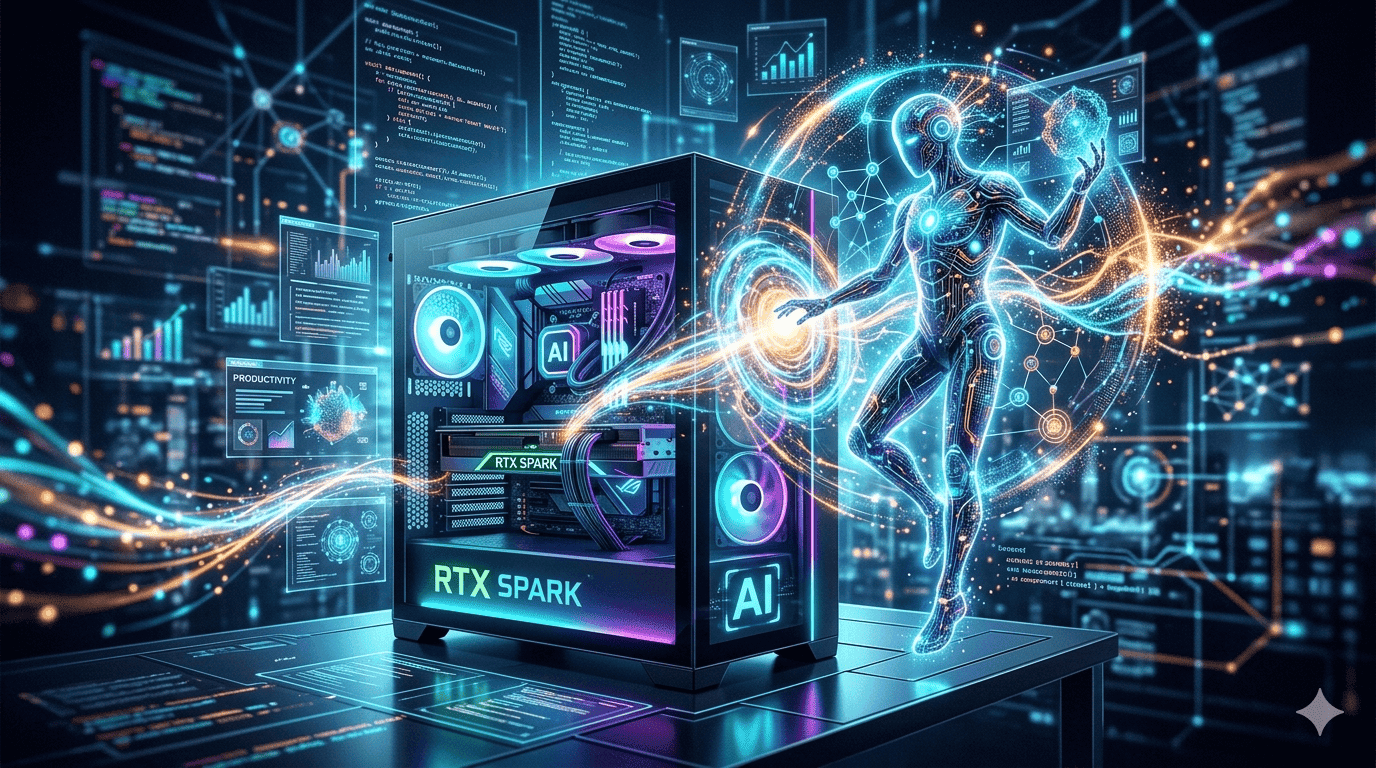
TL;DR AI Agent PC impact is strongest when a PC can run agents locally, keep context across apps, and handle AI workflows without forcing every action through the cloud. NVIDIA RTX Spark anchors that shift with 1 petaflop of AI performance, while Adobe’s Photoshop and Premiere work shows where the first practical gains will land.
Why AI Agent PCs Matter Now
AI Agent PC impact starts with a simple change in how the machine behaves. Instead of waiting for every click, an agent can design a process with available tools and carry it through. That matters because the PC stops acting like a passive terminal and starts acting like a coordinated system that can deliver outcomes with less hand-holding.
The practical shift is obvious in office work. A company that spends hours moving data between spreadsheets, chat apps, and cloud folders can let agents handle the first pass, then review the exceptions. For a user, that means less repetitive switching between products and more focus on the work that needs judgment.
The language around these systems is getting more specific, too. People now talk about natural language, gen AI, and LLMs because the behaviour is changing, not just the interface. The point is not that the model answers a prompt; it is that the agent can act on the answer in real time across devices.
What changes in daily work
AI agents can autonomously perform tasks by designing workflows with available tools, and they can gather data, analyse performance, and offer recommendations autonomously. That combination matters in meetings, support queues, and planning sessions where the next action is often obvious once the data is assembled.
For a company using Microsoft 365, that can mean sorting emails, summarizing a Teams thread, and drafting the next response in one process. For a design team, it can mean pulling references, checking files, and preparing a brief without making the human start from zero. The effect is less about raw speed and more about continuity.
Agents remember across tasks and changing states, so the work does not reset every time you switch windows. That is a real advantage when the job spans documents, dashboards, and cloud services across multiple devices.
- Agents can keep a process moving across multiple apps without constant supervision.
- They can deliver recommendations after collecting context from several sources.
- They can reduce repetitive handoffs that usually slow down a company’s internal work.
Why the category matters now?
The AI Agent PC impact is stronger now because businesses are already moving in this direction. 84% of Indian respondents reported implementing AI agents within the past two years, and 96% of enterprises are expanding the use of AI agents. That tells you the market is not waiting for a future wave; it is already in motion.
BCG says agents can enhance human teams by providing actionable insights and executing tasks that augment human expertise. That is the right framing. The best systems do not replace judgment; they remove the repetitive steps that drain it.
This is also where expectations are changing. A past several years’ worth of cloud-first thinking is giving way to a more local, agentic model. Buyers now expect technologies to work together, not sit in separate silos.
Core Functionalities of AI Agents
The core capability here is autonomous execution. IBM says agents can perform tasks by designing workflows with available tools, while BCG says they can gather data, analyse performance, and offer recommendations autonomously. That makes them useful for users anywhere the work follows a repeatable process, especially when decision-making needs to happen quickly.
This is not limited to one type of software. Agents can solve complex tasks across enterprise applications, including software design and IT automation. In agentic AI systems, they can also remember across tasks and changing states, which is why they feel more like a running process than a one-off chatbot reply.
The best way to think about them is as a copilot that can act, not just suggest. A copilot in a developer environment can review a pull request, flag issues, and draft a fix. In a support queue, it can summarize a ticket and prepare the next response before a human steps in.
Autonomous execution in practice
Autonomous execution matters most when the work is structured. Scheduling, inbox triage, and status updates are all examples of standardized business processes that agents can handle with less human error.
That is why the category is so relevant to operations teams and to decision making that depends on consistent, repeatable actions. A person in Outlook or Gmail does not need another reminder that inbox overload is real, they need a system that can sort, prioritize, and draft responses based on context.
In a company that uses Jira, Confluence, or similar software, agents can move from one step to the next without stopping for manual approval on every small action. The process still needs oversight, but the repetitive work no longer eats the day.
Software and development use cases
GitHub says agents can improve code quality by automating repetitive tasks and providing intelligent recommendations. For a developer working in VS Code, that means fewer interruptions while reviewing functions, tests, and dependency changes.
For a DevOps team, it can mean faster checks across CI pipelines, deployment notes, and incident follow-ups. The point is not that agents write perfect code. The point is that they remove a lot of the mechanical review work so the human can focus on design decisions, architecture, and edge cases.
For users working across fast-moving software teams, that shift is especially valuable.
Human teams and decision support
BCG’s view is useful here because it frames agents as support for human teams, not replacements. They can provide actionable insights, execute routine actions, and keep momentum going when people are juggling several systems at once.
That matters in a company where one team is in Excel, another is in Salesforce, and another is in Slack or Teams. The agent can bridge the gap between those environments without forcing everyone to copy the same information by hand.
It also changes expectations around responsiveness. Teams can move faster when the first pass happens automatically and people only step in where judgment is needed.
Choosing the Right AI Agent PC
Choosing an AI Agent PC starts with capability, not marketing language. The machine has to support the kind of process you expect, whether that means local inference, cloud-connected workflows, or a mix of both. If the hardware cannot keep pace, the experience turns clumsy fast.
The real question is whether the device fits your software stack. Windows apps, Microsoft services, and cloud-based technologies need to work together cleanly, or the agent becomes a novelty instead of a useful part of the day.
Security and memory matter just as much. AI agents with direct access to databases may inadvertently expose confidential information, and the complexity of artificial intelligence systems increases the chances of data leaks or breaches. If the PC is going to touch sensitive records, permissions need to be tight.
Performance and memory
AI performance determines whether the machine feels responsive or sluggish. Memory is just as important because agents can remember across tasks and changing states.
That continuity is useful only if the system can keep the context alive while other apps stay open. For a company using Excel, Power BI, and Teams together, the difference is obvious.
A system with enough headroom can keep those windows active while the agent handles summaries and follow-ups in the background, with less need for human intervention.
Software and ecosystem fit
Software fit is where many buyers get it wrong. If the agent cannot connect to the tools already in use, the whole setup becomes awkward.
That is especially true in Microsoft-heavy environments. A practical test is simple: can the device support the process you already run in Outlook, Word, Jira, or a cloud dashboard without extra friction?
If the answer is no, the AI layer is not ready for real work.
Security and privacy controls
Security controls should be treated as part of the core capability. Agents that can touch databases, documents, or internal knowledge bases need clear boundaries.
This matters even more in business settings where one mistake can spread across several systems. The safest setup is the one that limits access to only the actions the agent actually needs, reducing the need for human intervention.
Native language support also matters in India because accessibility shapes adoption. AI PCs can have a high impact on the PC market by bringing content and ease of accessibility in native languages, which makes the experience more practical for a wider range of people.
- Check whether the process can stay local or needs cloud support.
- Confirm that the device works with Microsoft apps and other daily software.
- Make sure permissions are narrow enough to protect confidential data.
- Look for technologies that support native language use without adding friction.
NVIDIA RTX Spark and the Hardware Shift
NVIDIA RTX Spark gives the category a concrete hardware base. It powers the world’s first Windows PCs purpose-built for personal agents, which is a clear signal that this is meant to run natively, not as an add-on.
The headline figure is 1 petaflop of AI performance. That matters because it gives the machine enough headroom for demanding AI models and agentic workflows that need to stay responsive while other apps remain open.
That is important because creative software is one of the first places where people will feel the difference in real work. It also shows technology choices at the hardware level can shape the software experience.
What the hardware actually delivers
RTX Spark is not just about benchmark bragging rights. It is about making agents feel native to the device so they can handle actions without constantly bouncing through the cloud.
That helps in workflows where latency is annoying, like image generation inside Photoshop or timeline-heavy edits in Premiere. If the system can keep up locally, the process feels smoother and less interrupted.
The hardware also matters because it gives companies a clearer standard to build around. A Windows PC built for personal agents is easier to evaluate than a vague AI-ready laptop with no defined capability.
Why the specification matters in real software
Photoshop and Premiere are the clearest examples because they sit where AI and graphics overlap. Adobe’s work on RTX Spark suggests faster masking, editing, and generative features, which are exactly the kinds of capabilities creators notice first.
For a video editor in Premiere, faster AI processing can shorten the wait between cut, review, and export. For a designer in Photoshop, it can make iterative edits feel less like a stop-and-start process.
That is why the number matters. It is not just about peak speed, it is about whether the machine can deliver consistent performance when several technology layers are active at once.
It changes expectations
RTX Spark also shifts expectations for future PCs. Once a system can run agents locally with this level of capability, buyers will start expecting similar behavior from more machines.
The next wave of PCs will not just host language models in the background, they will be built to support AI models and compound AI systems more directly. That makes local responsiveness a baseline expectation instead of a special feature.
What Comes Next for AI Agent PCs
AI Agent PC impact is moving from concept to everyday utility because the hardware, software, and workflow pieces are starting to line up. The article’s data points show that adoption is already underway, with 84% of Indian respondents reporting AI agent implementation in the past two years and 96% of enterprises expanding use.
RTX Spark adds a concrete benchmark with 1 petaflop of AI performance, which helps explain why local, responsive agents are becoming more realistic on Windows PCs. The practical takeaway is that buyers should focus on fit, memory, security, and ecosystem support rather than treating AI as a generic feature.
If you are evaluating a device or planning a rollout, start by testing one repeatable workflow and see whether the agent can complete it without breaking context or adding friction. That is the clearest way to judge whether the system supports real work.
Frequently Asked Questions
Q. What is the main AI Agent PC impact for everyday work?
The main impact is continuity across tasks, because agents can keep context while moving between apps. That matters in workflows like Microsoft 365, where a system can sort emails, summarize a Teams thread, and draft a response in one process. It reduces repetitive switching and lets people focus on judgment-heavy work.
Q. Why does NVIDIA RTX Spark matter in this category?
RTX Spark matters because it gives the category a concrete hardware base with 1 petaflop of AI performance. It also powers the world’s first Windows PCs purpose-built for personal agents. That makes local, responsive AI workflows more realistic than a vague AI-ready label.
Q. Which software gets the clearest early benefit?
Adobe Photoshop and Premiere are the clearest early examples. The article points to faster masking, editing, and generative features in Photoshop, plus shorter waits between cut, review, and export in Premiere. Those are visible gains because they sit where AI and graphics overlap.
Q. What should buyers check before choosing an AI Agent PC?
Buyers should check performance, memory, software fit, and security controls. The article specifically calls out Windows apps, Microsoft services, Outlook, Word, Jira, and cloud dashboards as practical fit tests. It also says permissions should stay narrow when the device touches confidential data.
Q. How are AI agents used in enterprise settings?
They are used to gather data, analyse performance, and offer recommendations autonomously. The article gives examples like inbox triage, status updates, support queues, and software development tasks in VS Code. BCG also frames them as support for human teams, not replacements.
Q. Why does native language support matter in India?
Native language support matters because accessibility shapes adoption. The article says AI PCs can have a high impact on the PC market by bringing content and ease of accessibility in native languages. That makes the experience more practical for a wider range of people.
Is an AI Agent PC Worth It for Work and Creative Teams?
AI Agent PC impact is worth paying attention to when the device can run agents locally, keep context across apps, and support the software you already use. The strongest recommendations in this article point to systems that can handle repeatable work without constant supervision, and RTX Spark shows what that looks like with 1 petaflop of AI performance. For creative teams, Photoshop and Premiere are the clearest examples of where the gains show up first.
If you are buying for office work, choose a system that fits Microsoft 365, Outlook, Word, Jira, or a cloud dashboard without friction. If you are buying for creative work, prioritize the hardware path that supports faster masking, editing, and generative features in Adobe apps. If you are rolling out across a team, start with one repeatable workflow and test whether the agent can complete it without breaking context.
The best next step is to match the machine to the workflow before you treat AI as a headline feature. That approach helps you avoid weak fit, unnecessary complexity, and security gaps. It also gives you a clearer answer on whether the device is ready for real work or just a demo.
Ready to upgrade your tech?
Browse our collection of quality refurbished products at unbeatable prices.