
Why RAM Prices Surged in 2026: The Hidden Impact of AI on Memory Costs
Why RAM prices surged in 2026 explained with AI demand supply constraints DDR5 transition and future outlook.

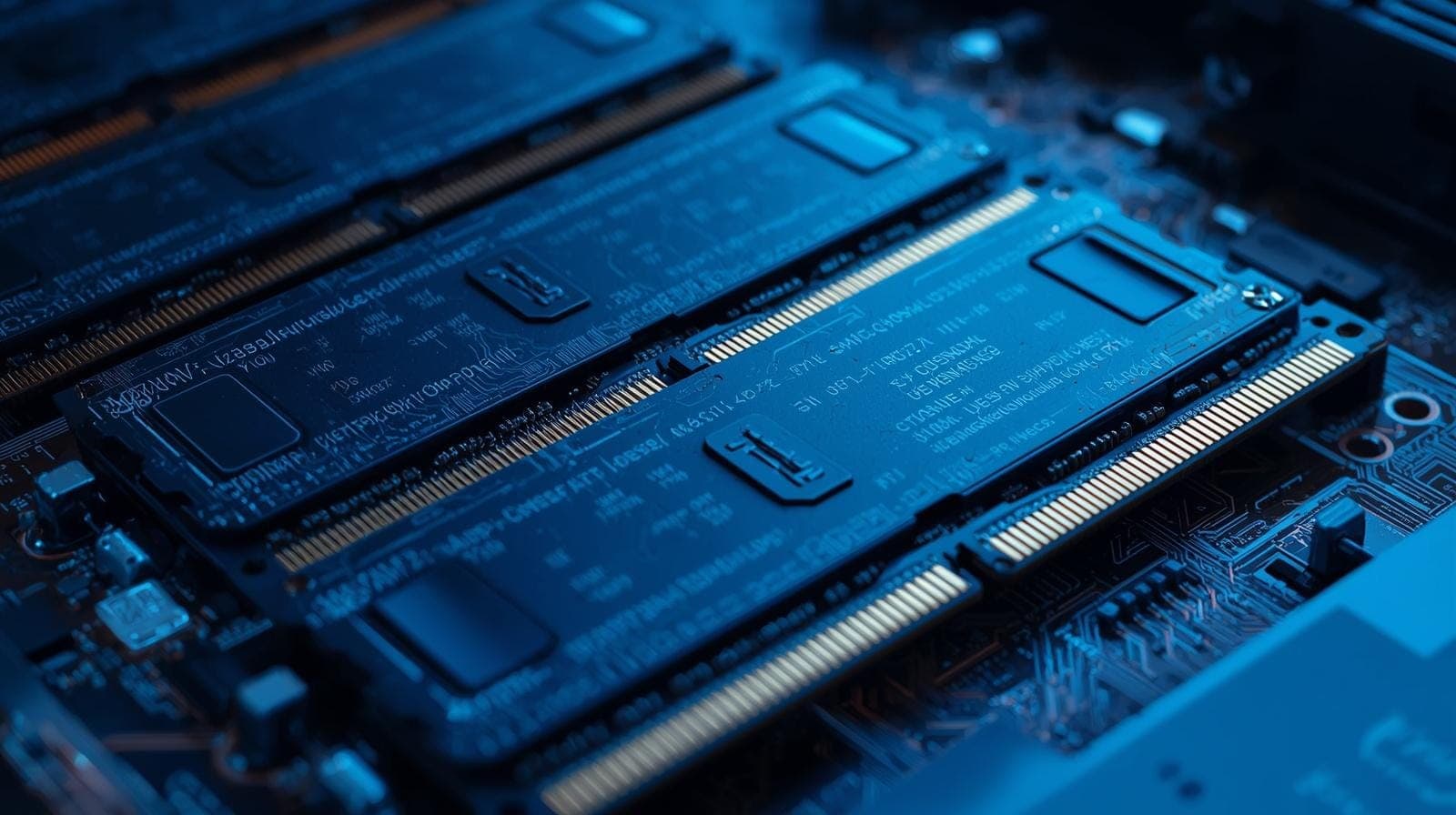
TL;DR RAM prices surged in 2026 because artificial intelligence fundamentally changed who the real buyers of memory are. Instead of laptops, gaming PCs, and smartphones driving demand, AI data centres, cloud providers, and model inference infrastructure are now consuming a massive share of global DRAM and high-bandwidth memory supply. At the same time, manufacturers shifted production toward higher-margin AI memory, DDR5 transitions tightened both old and new supply chains, and the global DRAM market remained concentrated among a few giants. The result is a structural memory repricing cycle rather than a normal short-term spike, which is why elevated RAM prices are likely to remain a defining reality through 2027 and possibly beyond.
The Sudden Shock: Why RAM Became Expensive Again
For years, RAM followed a relatively familiar pattern. Prices moved in cycles, but over longer periods they generally trended downward, which made memory upgrades feel like one of the safest and most affordable hardware improvements. That expectation has been completely disrupted in 2026. Instead of becoming cheaper, memory prices rose sharply across both consumer and enterprise segments, with some configurations nearly doubling within a short time window. For PC builders, laptop buyers, gamers, and IT procurement teams, this sudden reversal felt unusually aggressive compared to previous DRAM cycles.
What makes this surge different is that it is not being driven by a simple temporary shortage or one weak production quarter. This is a structural shift in demand. Artificial intelligence has transformed memory from a background component into a strategic infrastructure layer. AI models need enormous data movement, large working datasets, and extremely fast access to active parameters, which means memory is no longer just supporting processors, it is increasingly defining the practical scale of computing itself.
This is why the shock feels deeper than a normal market cycle. The dominant buyers have changed, the margin priorities have changed, and the role of RAM inside the technology stack has changed. In 2026, memory stopped being “cheap capacity” and started behaving like a constrained strategic resource.
How AI Changed the Demand Curve Forever
The most important reason RAM prices surged is that artificial intelligence created a new and permanently larger demand curve for memory. Traditional software workloads certainly needed RAM, but they rarely required the extreme parallel data access patterns seen in AI training and inference systems. Generative AI, recommendation engines, autonomous systems, and large language model serving all depend on moving huge volumes of data continuously, which places extraordinary pressure on memory infrastructure.
This demand is no longer limited to a handful of hyperscalers. Cloud providers, enterprise SaaS companies, healthcare research, fintech risk systems, robotics platforms, media generation startups, and government compute environments are all building AI capacity simultaneously. Every new AI cluster introduces thousands of servers, and every server requires large DRAM pools or specialised high-bandwidth memory. This has created a world where AI infrastructure can absorb supply faster than traditional consumer markets ever could.
The deeper market shift is that inference is now just as important as training. Early AI spending focused mainly on model creation, but 2026 infrastructure spending increasingly supports models running live in production 24/7. That means baseline memory consumption remains high around the clock, locking in persistent demand instead of bursty research-driven spikes. This is why the market now looks structurally different rather than temporarily overheated.
Why Consumer RAM Lost Priority to AI-Optimised Memory
Another major reason prices climbed is that memory manufacturers changed what they want to produce. Consumer DDR4 and DDR5 modules still matter, but they are no longer the most profitable segment. AI systems rely heavily on high-bandwidth memory, advanced server DRAM, and premium enterprise memory stacks that deliver much higher margins than retail desktop sticks or laptop SO-DIMMs.
This economic incentive has reshaped production priorities. When AI companies are willing to sign long-term supply contracts and pay significantly higher prices, manufacturers naturally allocate more wafer capacity toward those categories. Even if total memory output rises, the amount left for standard desktop and laptop memory can still tighten, which creates a perception of scarcity in the retail market.
The result is that consumer RAM is now often receiving residual production capacity rather than being the central planning priority. This is one of the clearest reasons why both DDR4 and DDR5 stayed expensive longer than many PC buyers expected in 2026.
Why Supply Cannot Expand Fast Enough
A common reaction to higher prices is to assume manufacturers can simply make more RAM. In reality, memory production is one of the most capital-intensive and technically constrained segments of the semiconductor industry. Building a new advanced fabrication facility takes several years, billions of dollars, and highly specialised process control.
This creates a severe lag between demand shocks and real supply response. By the time a company announces new capacity, it may still take three to five years before the facility materially affects global DRAM availability. In a fast-moving AI infrastructure boom, that delay is enormous. Demand can compound multiple times before the first meaningful wafer output even begins.
The problem becomes even harder because newer memory technologies are more complex. High-bandwidth memory uses advanced stacking and packaging approaches, while DDR5 still requires ramp efficiency improvements. This means even “more production” does not instantly translate into more affordable consumer modules.
The Power of Samsung, SK Hynix, and Micron
The memory market is unusually concentrated, and this concentration amplifies pricing pressure. Samsung, SK Hynix, and Micron Technology together control the overwhelming majority of global DRAM output. When a market is this concentrated, small strategic changes in production mix or capacity discipline can significantly influence worldwide pricing.
In normal cycles, competition helps stabilise prices. But in a world where AI memory delivers better margins and demand is persistently strong, the incentive is not to flood the market with cheap consumer RAM. Instead, disciplined production keeps margins healthy while premium enterprise segments remain undersupplied enough to preserve pricing strength.
This is one of the reasons the 2026 memory cycle feels more durable than previous DRAM spikes. The dominant producers have both the leverage and the financial incentive to optimise for profitability instead of simply chasing volume.
DDR5 Transition Made Both DDR4 and DDR5 More Expensive
The transition from DDR4 to DDR5 added another layer of pricing pressure. DDR5 is better aligned with modern workloads because it offers higher bandwidth and better efficiency, but large platform migrations always create awkward supply dynamics. Early in adoption, DDR5 volumes are still scaling, which keeps prices elevated.
At the same time, DDR4 production is gradually being deprioritised. This creates a dual squeeze. Older systems still need DDR4, but supply shrinks because manufacturers increasingly prefer DDR5 and AI memory products. Meanwhile, DDR5 remains expensive because demand is rising faster than mainstream supply maturity.
This is why many consumers in 2026 felt trapped regardless of platform choice. Staying on DDR4 did not guarantee affordability, while moving to DDR5 often required paying an early-adoption premium.
The Ripple Effect Across PCs, Laptops, and Smartphones
RAM price increases do not stay isolated at the component level. Because memory is foundational across nearly every consumer device, higher DRAM costs directly flow into laptop pricing, gaming PC configurations, smartphones, tablets, and even cloud subscription costs.
Laptop manufacturers have already started absorbing part of the cost while also raising prices in performance-oriented segments. Gaming laptops and creator systems are especially exposed because they rely on larger memory configurations. Smartphone vendors face similar pressure because modern flagship and upper-mid devices increasingly ship with 8GB, 12GB, or even 16GB memory tiers as standard.
A subtler side effect is configuration downgrading. Some brands may reduce base RAM tiers in entry-level products to preserve pricing optics, which can quietly hurt long-term usability for buyers who assume the rest of the market is still improving.
Why This Is Not a Temporary Spike
Historically, RAM pricing followed boom-and-bust cycles, so many buyers are still waiting for the familiar crash phase. The problem is that the current drivers are structural. AI demand keeps compounding, inference workloads stay permanently active, supply expansion remains slow, and the most profitable production paths are increasingly enterprise-focused.
This means waiting for prices to “return to normal” may not work the way it did in previous cycles. Even if pricing stabilises by late 2027 or 2028, the likely outcome is a new normal rather than a return to pre-AI lows. Memory is now directly tied to one of the most aggressively funded technology shifts in modern computing history.
For consumers and businesses, the practical takeaway is simple: memory should now be treated as a long-term budget-sensitive component rather than a trivial afterthought.
Why Memory Has Become the New Computing Bottleneck
The most important long-term insight is that memory bandwidth and capacity are increasingly becoming the real bottlenecks in modern computing. Processor performance still matters, but as AI models grow larger and applications become more context-heavy, the ability to feed data quickly is becoming more critical than raw CPU speed in many environments.
This changes how the entire industry thinks about hardware planning. Laptops, desktops, servers, smartphones, and cloud platforms now need to optimise around memory availability and cost in ways that were far less critical just a few years ago.
That is why the 2026 RAM surge is more than a pricing story. It is evidence that memory has moved to the centre of the technology stack, and AI is the force that pushed it there.
Frequently Asked Questions
Q. Will RAM prices realistically stay high through 2027 as well?
Yes, that is the most realistic expectation right now. The key reason is that the demand pressure from AI infrastructure is not slowing down, while new fabrication capacity still takes years to come online. Even when additional plants begin production, the industry may already be facing another layer of demand from larger AI inference deployments and early DDR6 transitions. This means pricing may stabilise, but a return to pre-AI lows is increasingly unlikely.
Q. Is AI genuinely the biggest reason behind this RAM price surge?
Yes, AI is clearly the dominant structural driver. Unlike previous memory cycles driven by consumer PC upgrades or smartphone launches, this cycle is powered by hyperscalers, cloud providers, and AI model infrastructure that buy memory at enormous scale and premium prices. That completely changes the demand hierarchy and pushes consumer buyers lower in the priority chain.
Q. Why can’t companies just manufacture much more RAM quickly?
The bottleneck is fabrication complexity and time. A modern memory fab can take three to five years and billions of dollars to become operational. On top of that, advanced memory types such as high-bandwidth memory are significantly harder to scale than older DRAM products. This means supply always reacts far slower than sudden demand explosions.
Q. Are gaming PCs and creator laptops directly affected by this?
Absolutely, and in many cases they are among the first to feel it. These systems increasingly depend on 16GB to 32GB memory baselines, so even moderate price increases in DRAM have a visible impact on total system pricing. This is why many gaming laptops and creator notebooks saw noticeable price inflation in 2026.
Q. Is this similar to the GPU shortage during crypto mining?
The pattern is similar in the sense that a new technology wave suddenly overwhelmed existing supply chains. However, the RAM situation is arguably more structural because AI is not a speculative cycle alone, it is becoming core infrastructure for cloud services, enterprise software, and consumer platforms. That makes the memory repricing cycle potentially much longer-lasting than the crypto GPU shortage.






