Samsung’s New Trifold Smartphone For 2026
Samsung’s new trifold smartphone marks a major step in foldable innovation. This blog explores its evolution, competition, practicality and long-term reliability to understand how it fits into the 2026 foldable market.

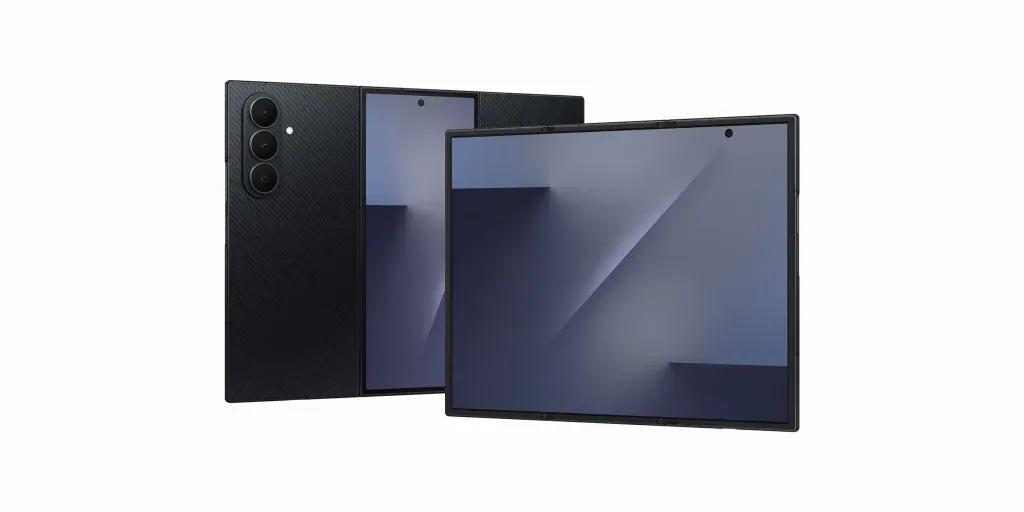
TL;DR Samsung’s new trifold smartphone introduces a more advanced folding structure, improved hinge durability and expanded multitasking, redefining what users expect from premium foldables. The evolution from Galaxy Fold Gen 1 to Gen 7 shows steady refinement in design, software and reliability. Chinese manufacturers such as Huawei and OnePlus have pushed aggressive innovations, while Google offers a more restrained foldable strategy. Despite higher prices, modern foldables are becoming more practical, with better durability, stronger hinges and optimised software. The trifold format represents Samsung’s next leap, offering more screen space and improved task management for power users seeking a futuristic, productivity-focused device.
Introduction
Samsung’s long awaited trifold smartphone represents the most significant leap in mobile design since the introduction of the first Galaxy Fold. After years of refinement and experimentation with different hinge mechanisms, screen materials and internal architectures, the trifold format signals a bold new direction for ultra portable computing. This category aims to bridge the gap between smartphones, tablets and compact laptops by allowing the device to unfold into a wide panoramic display that adapts to multiple form factors. Samsung’s entry into this segment carries high expectations because the brand has been shaping the foldable market for nearly a decade. Consumers anticipate a design that attempts to address the limitations of earlier foldables such as crease visibility, durability concerns, limited multitasking and battery endurance.
The trifold design is expected to bring advances in hinge flexibility, display layering, screen brightness and long term reliability. It expands the usability of adaptive form devices by enabling three way folding, allowing users to open the device fully for a large canvas, partially fold it into a compact productivity mode or collapse it into a conventional smartphone size. Early preview discussions suggest stronger ultra thin glass, reinforced hinge sections, improved water resistance and high refresh rate adaptive displays. As Samsung continues refining its materials and software ecosystem, the trifold concept promises to offer a device that functions as a phone, a tablet and a small workstation depending on how it is folded. This is why the upcoming model is being viewed as a reflection of how Samsung envisions the next evolution of mobile computing for both professional and creative users.
Consumers can expect deep integration with Samsung’s ecosystem services, improved DeX capability and better support for multitasking windows. The larger surface area gives more room for advanced productivity tools, higher resolution video playback and flexible interface layouts. This device is not only a technological statement but also Samsung’s attempt to redefine hybrid computing for users who demand versatility in a single device. The arrival of the trifold smartphone does not replace existing foldables but expands the category by giving users a more powerful and adaptable option for daily use.
Understanding Samsung’s Folding Phones From Generation 1 To Generation 7
Galaxy Fold Generation 1
Samsung’s first foldable brought global attention to flexible display technology. It introduced an inward folding design and attempted to combine smartphone compactness with tablet scale productivity. Although the early model experienced durability challenges, it marked a major shift in mobile hardware experimentation and laid the foundation for future refinement.
Galaxy Fold Generation 2
The second generation improved hinge engineering, stability and screen protection. Samsung adopted a more robust design that reduced dust ingress issues and refined the structure for smoother unfolding. Software optimisation also improved, offering better multitasking and app continuity across the folded and unfolded form.
Galaxy Z Fold Generation 3
This generation introduced the first significant leap in durability with stronger ultra thin glass and improved water resistance. Samsung also worked on camouflaging the display crease and created a more comfortable outer display for daily use. The device transitioned foldables from experimental to practical for many users.
Galaxy Z Fold Generation 4
The fourth generation enhanced performance, weight balance and software flexibility. Samsung focused on reducing bulk, improving camera performance and refining the hinge for smoother transitions. It became a preferred choice among professionals seeking portable multitasking.
Galaxy Z Fold Generation 5
The fifth iteration introduced a redesigned hinge with fewer moving parts. This made the device slimmer and more reliable. The display crease became less noticeable and thermal performance improved, making the device more comfortable during extended sessions.
Galaxy Z Fold Generation 6
Samsung focused heavily on structural stability by reinforcing the foldable glass and adopting new materials for better longevity. The interface offered more refined multitasking with easier window management and improved stylus responsiveness.
Galaxy Z Fold Generation 7
The seventh generation became the precursor to the trifold design by perfecting hinge mechanics and nearly eliminating major tradeoffs such as visible creases and long term wear. It delivered stronger brightness levels, reduced weight and improved battery optimisation, allowing foldables to approach mainstream usability rather than niche experimentation.
Chinese Smartphone Brands' Take On Folding Phones
Huawei’s Approach To Foldable
Huawei helped accelerate the evolution of foldable smartphones by approaching design from a different angle. Its early outward folding models challenged the industry to rethink how displays could adapt to new form factors. Huawei’s engineering focused heavily on strong hinge structures and large outer displays that could be used comfortably without unfolding. As generations advanced, Huawei made significant strides in crease minimisation, multitasking performance and camera quality inside foldable devices. By integrating large batteries and advanced chipset optimisations, Huawei positioned its foldables as productivity oriented tools with strong hardware foundations. The company continued refining durability by introducing improved materials and water resistance. Huawei’s strategy emphasised a fluid combination of performance and flexibility where foldables could replace both phones and tablets for many users. The brand’s refinements demonstrated that China’s foldable market was maturing rapidly and becoming a strong competitive force against Samsung’s long standing leadership.
OnePlus’s Approach To Foldables
OnePlus entered the foldable space with a focus on lightweight designs, high quality displays and user comfort. Its foldables offered brighter screens, improved hinge motion and a flatter crease compared to many rivals. OnePlus emphasised smooth software optimisation, enabling fluid transitions between folded and unfolded states while maintaining strong efficiency. Performance tuning allowed foldables to remain cool under load and responsive during multitasking. OnePlus also prioritised premium materials and refined ergonomics that reduced hand strain. By focusing on a balanced combination of performance, refinement and user friendliness, OnePlus created foldables that felt like natural extensions of their flagship devices. This approach gave consumers hardware that emphasised the enjoyment of using a foldable without overwhelming complexity. The rise of OnePlus in this category underscored that foldables were becoming mainstream, with manufacturers competing on design quality rather than novelty.
Google’s Take On Folding Phones
Google’s entry into the foldable market brought more attention to software optimisation than hardware design alone. The company aimed to create foldables that performed well through intelligent interface management, adaptive layouts and seamless transitions between states. Its approach relied heavily on Android level improvements that allowed apps to scale naturally across different display sizes. Google’s foldables focused on thoughtful user experience elements such as improved multitasking, split screen arrangements and continuity features. Even though Google’s hardware did not always match the durability and refinement of Samsung or Huawei, its software direction strengthened the overall foldable ecosystem. Through system level enhancements, Google encouraged developers to build adaptive interfaces, allowing the entire category to become more consistent across brands. Google’s influence ensured that foldable phones were not treated as experimental devices but as mainstream tools with meaningful software support and long term potential.
How Reliable And Practical Folding Phones Truly Are And Whether They Justify Their Cost
Foldable and trifold smartphones have matured significantly since their earliest versions, making them far more reliable in 2026 than many users assume. Modern hinge mechanisms use fewer moving components and stronger materials to withstand tens of thousands of folds without visible degradation. Ultra thin glass has evolved to feel more stable, while scratch resistance and pressure handling capability have improved steadily across generations. Thermals have become more controlled thanks to redesigned vapour chambers. Battery distribution has become more efficient, allowing foldables to maintain endurance despite larger displays. Software that once struggled with layout shifts now supports adaptive scaling, stable multitasking and smooth window transitions.
Practicality depends largely on the user’s workflow. Professionals who emphasise productivity benefit from the ability to work on large displays that fold into pocketable devices. Students and creators enjoy the versatility of having multiple screen modes in one product. Travellers appreciate how one device can replace a tablet and phone together. However, the cost remains a barrier for many buyers. Foldables justify their price when their features offer tangible benefits that replace the need for multiple devices. If users do not perform multitasking, content creation or heavy on screen work, traditional smartphones remain more economical. For those who seek an all in one hybrid device capable of functioning as a compact workstation, foldables deliver enough versatility to validate their premium pricing. The trifold format elevates this argument further by expanding display real estate in ways that traditional foldables cannot. Foldables have grown from novelties into reliable high end tools, but their value depends entirely on how much of their unique design a user can integrate into daily life.
Why Samsung’s Trifold Smartphone Could Redefine the Future of Premium Mobile Computing
The most important takeaway is simple, Samsung’s upcoming trifold smartphone is not merely another foldable experiment but a reflection of how premium mobile computing is evolving toward larger adaptive displays, AI-driven workflows, and hybrid productivity ecosystems. After nearly a decade of refining foldable technology through multiple Galaxy Fold generations, Samsung now appears positioned to deliver a device that bridges smartphones, tablets, and compact workstations more effectively than previous foldables ever could. This dramatically expands how users may interact with mobile devices during productivity, entertainment, and multitasking workflows.
The trifold format especially stands out because it addresses one of the biggest limitations of traditional smartphones, limited workspace for multitasking and content interaction. A larger expandable display creates significantly more room for split-screen productivity, AI-assisted workflows, video conferencing, gaming, media consumption, and creator-focused applications while still maintaining pocketable portability when folded. Combined with stronger hinge durability, improved ultra thin glass, Galaxy AI integration, and adaptive multitasking software, Samsung’s trifold concept feels substantially more practical than earlier foldable generations. This improves long-term usability considerably for professional and creative users alike.
At the same time, buyers should understand that trifold smartphones will initially remain premium productivity-focused devices rather than mainstream budget alternatives. Users prioritizing multitasking, portable workstation capability, media consumption, and futuristic hardware experiences will benefit the most from this evolving category. Casual users primarily focused on messaging, social media, and basic smartphone workflows may still find traditional flagship phones more practical financially. However, as foldable manufacturing improves and pricing gradually becomes more accessible, Samsung’s trifold smartphones could eventually become one of the defining premium Android categories heading into the late 2020s.
Frequently Asked Questions
Q. What is Samsung’s trifold smartphone?
Samsung’s trifold smartphone is an advanced foldable device expected to feature a three-panel folding structure capable of expanding into a much larger tablet-style display. The design focuses heavily on multitasking, productivity, entertainment, and hybrid mobile computing workflows.
Q. How is a trifold phone different from a regular foldable phone?
A regular foldable phone usually folds once using two display sections, while a trifold device folds across three sections to create a much larger expandable screen area. This allows significantly more workspace for multitasking, media consumption, and productivity-focused usage.
Q. Will Samsung’s trifold phone support Galaxy AI features?
Industry discussions and leaks strongly suggest Samsung’s trifold smartphone will heavily integrate Galaxy AI features focused on multitasking, content generation, adaptive workflows, translation tools, productivity assistance, and intelligent software optimization across larger displays.
Q. Are foldable smartphones durable enough in 2026 and 2027?
Modern foldable smartphones have become substantially more durable because manufacturers now use stronger ultra thin glass, reinforced hinge systems, improved water resistance, titanium or aluminium frames, and more advanced structural engineering compared to earlier generations. Long-term reliability has improved significantly overall.
Q. Are trifold smartphones good for productivity?
Yes, trifold smartphones are especially useful for productivity because the larger expandable display improves split-screen multitasking, note-taking, video conferencing, document editing, presentation workflows, and media management substantially compared to conventional smartphones.
Q. Could trifold smartphones eventually replace tablets?
For many professional and creator-focused users, trifold smartphones could reduce the need for carrying separate tablets because they combine portable smartphone functionality with significantly larger tablet-like screen space in one adaptable device. This dramatically improves convenience during travel and hybrid workflows.
Ready to upgrade your tech?
Browse our collection of quality refurbished products at unbeatable prices.