
HP ZBook Firefly G10 Performance In 2026: CAD, 3D, Rendering, And AI Workloads
HP ZBook Firefly G10 delivers balanced workstation performance for CAD, 3D modeling, rendering previews, and hybrid AI workflows in 2026.

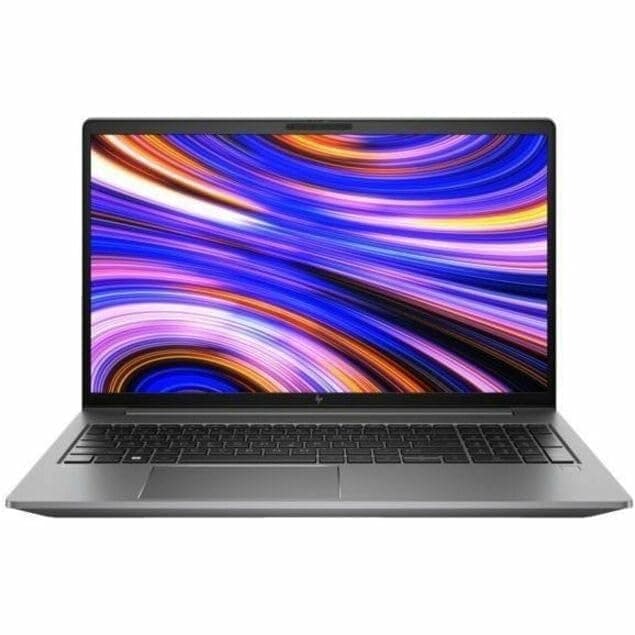
TL;DR The HP ZBook Firefly G10 is HP’s modern thin mobile workstation that blends portability with professional-oriented performance suitable for 2D CAD, moderate 3D modeling, rendering previews, and hybrid AI workflows in 2026. Featuring up to 13th-Gen Intel Core processors or AMD Ryzen PRO CPUs, professional discrete graphics such as the NVIDIA RTX A500 Laptop GPU, up to 64 GB of DDR5 memory, and support for PCIe Gen4 NVMe storage, the Firefly G10 handles everyday professional workloads with balanced efficiency. It is not designed for high-end cinematic rendering or large-scale neural network training, but its professional driver support, ISV certifications, and hardware choices make it a reliable choice for engineers, designers, and analysts. Refurbished HP ZBook Firefly G10 units provide excellent value in India’s market, where new retail prices often exceed realistic workstation budgets. This article evaluates its real-world capabilities across CAD, 3D modeling, rendering, AI tasks, thermal behavior, comparisons with contemporaries, and practical purchasing guidance.
HP ZBook Firefly G10 Workstation Overview in 2026
The HP ZBook Firefly G10 Workstation Laptop represents a matured approach to professional mobile computing in 2026, combining the portability of a lightweight chassis with the performance stability expected of a workstation class system. Its configurations span up to 13th Gen Intel Core i7 processors and AMD Ryzen PRO CPUs, paired with either integrated graphics for basic tasks or discrete professional options such as the NVIDIA RTX A500 Laptop GPU, enabling GPU-assisted workflows in supported applications. Memory support reaches up to 64 GB of DDR5, and storage configurations accommodate up to 2 TB of PCIe Gen4 NVMe storage, ensuring fast data throughput for project files, applications, and large datasets.
For buyers in India who want proven professional performance without steep new hardware pricing, exploring refurbished options can radically improve value. Many Refurbished HP ZBook Firefly G10 listings include high-end CPU, large RAM, and discrete GPU configurations that rival new mid-tier workstations at a lower total cost, especially for workflows that rely on professional application certification and consistency. You can explore currently available refurbished ZBook models. The balance of modern hardware, ISV certification, enterprise reliability, and affordable secondary market availability positions the Firefly G10 as an attractive choice for engineering, architecture, analytics, content creation, and hybrid AI inference tasks.
In this article, we examine how the HP ZBook Firefly G10 Specs translate to practical performance in 2026 across CAD drafting, 3D modeling and rendering, AI workloads with discrete GPU comparison, thermal and sustained load behavior, and professional use cases. We also provide tables that help clarify where the Firefly G10 fits relative to similar thin workstations and conclude with a structured recommendation and decision framework.
CAD Performance
In 2026, the HP ZBook Firefly G10 continues to be a practical choice for professionals working with computer-aided design (CAD) applications, driven by a combination of modern CPU architectures and professional graphics support. CAD workloads such as drawings, assemblies, constraints, and dimensional updates in applications like AutoCAD, SolidWorks, and Fusion 360 place significant emphasis on single-thread performance and stable multi-core throughput for large file manipulation. The Firefly G10’s use of Intel 13th-Gen Core U-series processors or AMD Ryzen PRO CPUs (depending on configuration) provides high clock speeds that translate into responsive sketch generation, quick geometry updates, and consistent viewport interaction during long sessions. When paired with high memory configurations such as 32 GB or 64 GB of DDR5 RAM the system minimizes delays even when managing multiple complex files simultaneously, and the high bandwidth of DDR5 further supports large array or multi-component handling.
Storage architecture also plays an important role in CAD productivity. Most G10 configurations include PCIe Gen4 NVMe SSDs, which dramatically reduce loading times for large design files and external references, as well as improve save times for assembly updates or large blueprint exports. For professionals who work with multi-gigabyte datasets, this responsiveness often outweighs the raw core count or peak clocks. The combination of high-speed storage pathways and balanced CPU performance leads to a tight workflow loop with fewer interruptions.
Graphics support is another critical aspect. When the Firefly G10 is equipped with professional discrete graphics options such as the NVIDIA RTX A500 Laptop GPU, viewport performance for shaded, hidden line, and rendered previews improves significantly compared with integrated solutions alone. Even though the RTX A500 is positioned as an entry-mid range professional GPU, its driver optimizations for professional CAD tools provide smoother real-time interactions, reducing window redraw lag and enabling higher fidelity previews without compromising stability. This advantage becomes more evident with growing assembly size and repeated viewport manipulation.
Equally important is ISV certification and driver support. HP’s Firefly series typically benefits from certified drivers for many professional CAD tools, meaning both stability and compatibility have been validated through independent software vendors. This reduces the likelihood of graphical anomalies and provides peace of mind for engineering teams who depend on consistency and repeatability.
In real-world enterprise CAD workflows particularly in architectural planning, mechanical design, and industrial drafting the Firefly G10 strikes a solid balance between responsiveness, sustained performance, memory bandwidth, and professional graphics support. While it might not match the absolute horsepower of larger ZBook Power or Fury models, when properly configured it delivers dependable, productive CAD performance appropriate for most engineering and design contexts encountered in 2026.
3D Modeling & Rendering Performance
In 2026, the HP ZBook Firefly G10 remains a capable system for 3D modeling and rendering tasks though its effectiveness varies significantly based on configuration, particularly GPU choice. Modern workflows in software such as Blender, Autodesk Maya, and Fusion 360 increasingly benefit from both CPU performance and GPU acceleration. The hybrid CPU designs found in many G10 units such as 13th-generation Intel Core U-series or AMD Ryzen PRO models provide strong single- and multi-thread performance. This makes tasks like mesh editing, UV manipulation, geometry revisions, and basic shading operations consistently reliable, even when working with files that contain moderately complex models or larger assemblies.
For basic viewport interaction such as wireframe, shaded, or real-time orthographic views integrated graphics options like Intel Iris Xe (on Intel-based G10 configurations) handle small-to-medium scenes without major stutter. When models increase in polygon count or include more demanding shader effects, integrated graphics may begin to struggle due to limited execution units and shared system memory. In these scenarios, discrete GPU options, particularly configurations featuring the NVIDIA RTX A500 Laptop GPU provide meaningful improvements in viewport smoothness and rendering previews. The A500’s support for professional driver optimizations and hardware accelerated ray tracing (albeit at a modest capacity compared with higher-end RTX variants) enables the Firefly G10 to manage mid-level 3D scenes more fluidly and to render preview frames faster than integrated graphics alone.
When it comes to actual rendering performance, the distinction between CPU and GPU modes becomes important. CPU-based rendering where the CPU executes every ray and lighting calculation benefits from the G10’s robust core frequencies and multi-core throughput, but will naturally lag behind more specialized or modern CPUs designed with significantly higher core counts and cache sizes. This is where GPU-accelerated render engines such as Octane, Redshift, or Blender’s OptiX mode provide real advantage; when paired with an RTX A500, accelerated rendering sees faster frame times and reduced noise levels in final renders relative to CPU-only approaches. While the A500 does not deliver the same level of throughput as higher-end workstation GPUs like the RTX A2000 or A3000 series, it represents a step forward for the Firefly series and bridges the gap between lightweight laptops and heavier mobile workstations.
Another important aspect for 3D professionals is memory capacity and bandwidth. With DDR5 memory and higher capacities, the Firefly G10 maintains more model data in RAM, reducing dependency on slower paging and improving scene management. Storage speed also matters: PCIe Gen4 NVMe SSDs significantly reduce scene load times and project asset retrieval, a key factor when handling large texture libraries. This combination of memory and storage performance improves real-world workflow smoothness, even if raw render times may still lag behind modern, GPU-heavy systems.
In summary, the Firefly G10 is well-rounded for daily 3D modeling, asset creation, and preview rendering in professional tools. For professionals focused primarily on final frame production or high-end visual effects pipelines, cloud rendering or high-performance external GPU workflows remain more appropriate. However, its balanced CPU + discrete GPU options make it a solid choice for medium-complexity visualization and modeling tasks in 2026.
AI Workloads in 2026: CPU Inference, GPU Acceleration, and Hybrid Trends
In 2026, artificial intelligence workloads are far more hybrid and flexible than in earlier years, and the HP ZBook Firefly G10 reflects this transition. While the platform was never designed to replace high-end deep learning rigs, its modern configuration particularly when equipped with either NVIDIA RTX A500 Laptop GPU or a beefy discrete option performs well for a growing set of real-world professional AI tasks. CPU inference, data preprocessing, lightweight model training, and hybrid edge-cloud AI workflows are common in engineering and analytics environments, and the Firefly G10 is capable within this context.
At its core, AI workflows often split into processing stages: data loading and preprocessing, model training, and inference. The first stage preparing data, executing feature extraction, cleaning datasets, and transforming large data arrays is frequently bottlenecked by memory bandwidth and CPU throughput rather than GPU horsepower. In Firefly G10 configurations with modern Intel 13th-Gen or AMD Ryzen PRO CPUs and DDR5 memory, these tasks execute reliably. Frameworks like scikit-learn, NumPy, pandas, and even early stages of TensorFlow or PyTorch workflows leverage optimized CPU paths, AVX/AMX instruction sets, and multi-core scaling to handle moderate datasets without major slowdowns.
When AI workloads turn toward GPU acceleration particularly for deeper neural networks, convolutional model training, or transformer fine-tuning the presence of a discrete GPU becomes more meaningful. Integrated graphics, such as Intel Iris Xe, still lack the dedicated CUDA cores and tensor acceleration that mainstream deep learning frameworks require. Configurations of the Firefly G10 that include the NVIDIA RTX A500 Laptop GPU introduce CUDA support, professional driver stability, and modest hardware acceleration. This allows medium-sized models to train faster than CPU-only setups, and significantly accelerates GPU-dependent inference workloads. That said, the A500 is an entry-to-mid-tier accelerator compared to higher-end workstation GPUs such as RTX A2000 or A3000 which offer greater VRAM and tensor core budgets necessary for large, production-scale neural networks.
A visible trend in 2026 AI development is cloud-hybrid workflows. Many professionals train large models in the cloud while using local machines like the Firefly G10 for preprocessing, model tuning, inference validation, and edge deployment testing. Tools such as ONNX Runtime, TensorFlow Lite, and quantized inference engines minimize reliance on powerful local GPUs, allowing fast local experimentation and integration testing. In this scenario, the Firefly G10 excels at early-stage model iteration and iterative optimization.
Another emerging trend includes quantized models and efficient inferencing. More frameworks are optimized out-of-the-box to run reduced precision models (e.g., INT8) on CPUs or mid-tier GPUs, broadening the range of AI tasks the G10 can handle without requiring heavy GPU horsepower.
For professionals focused primarily on CPU-based inference, data analytics, and mid-tier GPU accelerated AI experimentation, the Firefly G10 provides a balanced platform in 2026. It does less well at large-scale training, complex transformer architectures, or highly parallel deep learning tasks areas where higher-end GPUs and distributed cloud resources remain standard.
Thermal & Sustained Load Behavior
The HP ZBook Firefly G10 was designed to be a thin yet professional mobile workstation and its thermal and sustained load behavior in 2026 reflects that design philosophy. Unlike consumer ultrabooks that prioritize transient performance bursts and then quickly clamp down thermally, the Firefly G10 uses a carefully balanced cooling solution with dual fans, heat pipes, and optimized vapor chamber design in select configurations. This arrangement is tuned to deliver predictable, stable performance over prolonged workloads rather than just peak benchmark scores.
In real-world professional workloads such as extended CAD drafting, continuous 3D modeling sessions, and data analysis tasks, the hybrid CPU architectures deployed in many G10 models such as Intel 13th Gen Core i7 and AMD Ryzen PRO series maintain steady clock frequencies without dramatic oscillation. The Performance cores handle foreground computational tasks, while the Efficiency cores manage background operations, reducing overall heat flux. As a result, sustained performance remains consistent over several hours of uninterrupted work, which is crucial for engineers and analysts running multi-hour batch processes, rendering previews, or large data recomputation loops.
When tasks combine CPU and GPU stress such as viewport rendering in 3D software or hybrid AI preprocessing, thermal management becomes more complex. In units equipped with discrete GPUs like the NVIDIA RTX A500 Laptop GPU, the cooling system distributes heat between both domains. Under sustained GPU load, clock speeds gradually moderate but do so in a controllable way that prioritizes system responsiveness. Unlike many thin consumer laptops that quickly throttle both CPU and GPU, the Firefly G10’s thermal profile preserves a predictable performance envelope over extended sessions, ensuring designers and engineers are not suddenly confronted with erratic slowdowns.
Acoustics under load are noticeable but professional; fans ramp up gradually as thermal load increases and rarely reach the high-pitched tones common in gaming machines. Surface temperatures near the keyboard and palm rest remain within comfortable ranges for extended productivity, which is important during long client presentations or all-day coding sessions.
Battery life interacts with these thermal behaviors. Under mixed workloads CAD, analytics, and light GPU tasks the Firefly G10 typically achieves 5–7 hours of operation, depending on display brightness and workload intensity. Sustained heavy GPU or CPU load naturally reduces this duration, but the efficient thermal tuning ensures that the system remains stable rather than thermally throttled or shut down.
In a workstation context where stability and sustained performance matter more than short bursts, the Firefly G10’s thermal design supports prolonged professional work without disruptive throttling or heat-induced performance cliffs. This makes it reliable for daily engineering use, where workflows may stretch across multiple hours with minimal variance.
Performance Comparison With Similar Thin Workstations
In 2026, the HP ZBook Firefly G10 occupies the thin mobile workstation category alongside systems like the Dell Precision 3480 and the Lenovo ThinkPad P1 Gen 5. While all three are mobile workstations designed for professional workflows rather than consumer gaming, they differ in their architectural strengths, GPU options, and workload suitability. The Firefly G10’s modern architecture typically featuring up to 13th-Gen Intel Core CPUs or AMD Ryzen PRO processors gives it an edge in multitasking, analytics, and CPU-bound CAD workflows compared to older Precision models that still use last-generation CPUs. This translates to smoother interaction in applications such as AutoCAD, Fusion 360, and technical computation workloads where single-core clock speeds and memory bandwidth are critical.
Graphics options also differentiate these workstations. The Firefly G10 can be configured with professional GPU options like the NVIDIA RTX A500 Laptop GPU, which provides better support for viewport acceleration and moderate GPU-accelerated rendering than basic integrated solutions. By contrast, certain Dell Precision 3480 configurations may rely on older GPU options or lower wattage variants aimed more at stability than GPU throughput. Meanwhile, the ThinkPad P1 Gen 5 occupies a slightly more performance-biased position with options for higher-end GPUs, making it better suited to heavier 3D rendering and larger simulation tasks. However, such performance gains come with increased thermal demands and often shorter battery life under sustained professional workloads.
Another point of comparison lies in machine expandability and enterprise tuning. The Firefly G10 offers flexible memory and storage upgrade paths up to 64 GB DDR5 and dual PCIe Gen4 NVMe bays which enhance large dataset handling and project load times. These choices are often comparable to offerings in the Precision 3480 and P1 Gen 5, but the modern memory and storage interfaces in the G10 typically yield faster real-world responsiveness.
In mixed professional workloads such as programming, financial modeling, and lightweight 3D modeling, the Firefly G10’s balanced CPU and GPU tuning often delivers equivalent or superior performance compared to its peers at similar price bands. Meanwhile, the ThinkPad P1 Gen 5 may pull ahead in heavy GPU-dependent tasks, albeit at a price and power budget premium that may not justify investment for all professionals.
Thin Workstation Comparison Table
| Workload Type | Recommended Configuration | Suitability | Refurbo Option |
|---|---|---|---|
| General Productivity | 16–32 GB RAM, 512 GB NVMe SSD, FHD Display | Excellent fit | Refurbished HP ZBook Firefly G10 |
| 2D CAD / Drafting | 32 GB RAM, RTX A500 GPU | Strong fit | Firefly G10 RTX Configuration |
| 3D Modeling (Moderate) | 32–64 GB RAM, RTX A500 GPU | Good | High-RAM Firefly G10 |
| AI Inference / ML | 32–64 GB RAM, NVMe SSD | Good | Firefly G10 Professional Model |
| Hybrid Workflows | High RAM + Fast NVMe | Very Good | Configured Firefly G10 |
| Heavy Rendering / AI Training | RTX-class workstation or cloud GPU | Not Recommended Locally | ZBook Power / Fury Series |
This comparison highlights that while the ZBook Firefly G10 may not match every high-end GPU configuration found in thicker workstation models, it remains a strong choice for professionals who value balanced performance, enterprise reliability, and extended deployment lifecycles without excessive retail pricing.
Use Case Recommendation
In 2026, the HP ZBook Firefly G10 serves best as a balanced mobile workstation for professionals whose workloads do not demand the absolute peak GPU performance found in larger, heavier machines. Its modern processor options including up to 13th-Gen Intel Core or AMD Ryzen PRO units combined with DDR5 memory and optional professional GPUs such as the NVIDIA RTX A500 Laptop GPU, make it versatile across a wide range of practical workflows. This includes general productivity, engineering design, CAD drafting, moderate 3D modeling, programming, and data analytics. In such contexts, the Firefly G10 delivers sustained performance, responsive interaction, and enterprise-grade driver support without forcing users into heavier and more power-hungry systems. Particularly for professionals who travel frequently or need a reliable laptop for client presentations and collaborative work, its thin chassis and strong battery life support mobile productivity.
For CAD and drafting workflows, professionals benefit from strong single-core performance and stable multi-core throughput, which together ensure responsive viewport interaction and fast file manipulations. This is especially true in configurations with discrete GPU options, which accelerate shading and real-time previews. For 3D modeling and rendering, the system is robust for small to medium scenes, but larger rendering jobs may still require either hybrid workflows (local previews + cloud/remote rendering) or higher-end GPU solutions. AI workloads in 2026 often combine local preprocessing, inference testing, and cloud-assisted training; in these hybrid scenarios, the Firefly G10 handles inference and lightweight model experimentation effectively, especially in configurations with discrete GPU support. Thicker mobile workstations remain dominant for massive neural network training, but for most design professionals and analysts, the G10 provides more than sufficient capability.
For business and financial modeling, the Firefly G10 demonstrates strong stability and responsive performance in spreadsheet manipulation, database querying, Python/R analytics, and visualization tasks. This is further amplified when paired with higher RAM configurations and fast NVMe storage. Part of the machine’s appeal in 2026 is that it avoids unnecessary complexity and power draw while still delivering predictable workflow throughput across professional applications. In sum, the Firefly G10 is most recommended for professionals who need a balance of mobility, sustained performance, and workstation reliability without the premium overhead of larger mobile workstations.
Refurbished Use Case Recommendation Table
| Workload Type | Recommended Configuration | Suitability |
|---|---|---|
| General Productivity | 16–32 GB RAM, 512 GB NVMe SSD, FHD | Excellent fit |
| 2D CAD / Drafting | 32 GB RAM, Quadro/RTX A500 GPU | Strong fit |
| 3D Modeling (Moderate) | 32–64 GB RAM, RTX A500 GPU | Good |
| AI Inference / ML | 32–64 GB RAM | Good |
| Hybrid Workflows | High RAM, NVMe | Very Good |
| Heavy Rendering / AI Training | High-end RTX / Cloud | Not recommended locally |
HP ZBook Firefly G10 Decision Framework
When evaluating the HP ZBook Firefly G10 as a professional workstation in 2026, it is important to align decision criteria with actual workflow demands rather than headline specs. For professionals whose daily tasks are dominated by CPU-bound operations such as 2D CAD drafts, business analytics, programming, documentation, and report generation the Firefly G10 provides an excellent balance of sustained workload throughput, responsive multitasking, and portable productivity. Its modern processor architectures, DDR5 memory support, and high-speed storage combine to make extended professional sessions feel smooth and reliable.
For workflows that incorporate moderate GPU acceleration such as 3D modeling, shading previews, or lightweight simulation configurations equipped with the NVIDIA RTX A500 Laptop GPU elevate user experience, enabling smoother real-time interaction and reduced preview render times. These configurations are especially relevant for engineering, design, and visualization professionals who require a responsive system but do not need the raw GPU power found in larger mobile workstations.
When tasks lean heavily on large-scale GPU rendering, real-time ray tracing, or deep neural network training, higher-end systems with larger GPUs or cloud-based solutions still outperform what the Firefly G10 can deliver. Nonetheless, for the vast majority of professional users in 2026 including consultants, analysts, mechanical engineers, architects, and AI practitioners focused on local inference and hybrid workflows the Firefly G10 strikes an effective balance of value, performance, and reliability. Refurbished workstation configurations further improve cost-to-performance ratios, making the Firefly G10 a smart choice for professionals seeking enterprise-level capability without excessive expenditure.
Frequently Asked Questions (FAQs)
Q. Is the HP ZBook Firefly G10 still relevant for CAD work in 2026?
Yes. It handles 2D drafting and mid-range CAD assemblies effectively, especially when configured with professional discrete GPU options.
Q. Can the Firefly G10 handle 3D modeling in Blender or Maya?
Yes. It supports light to moderate 3D modeling and preview rendering smoothly, though complex rendering may benefit from stronger GPUs or cloud rendering.
Q. Does the Firefly G10 support professional applications like SOLIDWORKS or AutoCAD?
Yes. With ISV certifications and professional GPU drivers, it runs major CAD, engineering, and design applications reliably.
Q. Is the NVIDIA RTX A500 GPU sufficient for rendering workloads?
Yes. It accelerates viewport rendering and moderate GPU rendering tasks, but heavy cinematic rendering requires higher-end workstation GPUs.
Q. How much RAM is recommended for professional workloads?
32 GB is recommended for most professional workflows, while 64 GB is ideal for large CAD assemblies, datasets, and AI workloads.
Q. Is the Firefly G10 suitable for AI and machine learning tasks?
Yes. It is well suited for AI inference, preprocessing, and lightweight model training, though heavy training workloads require more powerful GPUs or cloud infrastructure.
Q. What battery life can be expected under professional workloads?
Battery life typically ranges between 5 and 7 hours under mixed professional usage, depending on workload intensity and display settings.
Q. Is buying a refurbished HP ZBook Firefly G10 a good option in India?
Yes. Refurbished units offer excellent workstation performance and significantly better value compared to new retail pricing.
Q. How does the Firefly G10 compare to older models like Firefly G8 or G9?
It offers improved CPU efficiency, faster DDR5 memory support, and better GPU options, resulting in stronger overall workstation performance.
Q. Can the HP ZBook Firefly G10 be upgraded later?
Yes. Most configurations support storage upgrades and memory expansion, helping extend the workstation’s usable lifespan.
Ready to upgrade your tech?
Browse our collection of quality refurbished products at unbeatable prices.






