Best Laptops to Practice Coding: Laptops to Ace Your Coding Journey
The processor determines how smoothly your development tools run. For 2026, the minimum acceptable processors are Intel Core i5 from the twelfth generation onwards or AMD Ryzen 5 from the 5000 series or newer.


TL;DR The best coding laptops in 2026 are not the flashiest or the most expensive machines. The right choice depends on long typing comfort, stable thermals, strong battery life, SSD speed, and enough RAM to comfortably run editors, browsers, terminals, and local servers together. For most students, the smartest categories are refurbished business laptops, balanced mid-range Windows ultrabooks, and MacBook Air models, while gaming laptops only make sense for specialised workloads like machine learning or game development. A well-chosen coding laptop should remain dependable for at least four to five years, making comfort, upgradeability, and real-world consistency far more important than hype-driven specifications.
Why Coding Laptops Need a Different Buying Mindset
Learning to code has never been about flashy RGB keyboards, gaming aesthetics, or owning the most expensive laptop in your classroom. The real foundation of coding is consistency. Your laptop should boot quickly every day, stay responsive during long sessions, and disappear into the background so your focus stays on problem-solving rather than system frustration. For students, this matters even more because coding sessions often stretch across classes, libraries, hostels, and late-night project work.
A major mistake many learners make is confusing “powerful” with “practical”. Some buy ultra-cheap consumer laptops that struggle the moment multiple Chrome tabs, VS Code, and documentation are opened together. Others overspend on gaming laptops that deliver unnecessary GPU power but punish them with noise, poor battery life, and excessive weight. Both choices create friction that slowly affects learning momentum.
The right coding laptop is defined by reliability, keyboard comfort, thermal balance, and workflow efficiency. These factors may not look exciting on a product page, but they decide whether your laptop remains a productive learning tool through 2026 and still feels capable as you move into 2027 internships and early career development.
Why Coding Workloads Are Different From Normal Student Use
At first glance, coding may seem like simple text input, but development workflows place a very different kind of pressure on a laptop. Unlike casual browsing, coding often means keeping a code editor, browser tabs, documentation, local servers, Git tools, terminals, and communication apps open together for hours. This creates a sustained multitasking load that exposes weak processors, poor RAM management, and bad thermal design much faster than ordinary student use.
Heat management is one of the most overlooked parts of choosing coding laptops. Tools such as Android Studio, Docker, local databases, virtual machines, and emulators place constant pressure on the CPU. A poorly designed laptop may feel fine for short bursts but quickly starts throttling, heating up, and becoming distracting during longer sessions. This directly impacts focus and makes debugging and building projects unnecessarily frustrating.
Keyboard quality also matters far more than most students realise. Developers type thousands of lines over time, and poor key travel or mushy layouts quietly increase fatigue. This is why business laptops and premium ultrabooks continue to dominate developer communities. Long-term coding comfort depends heavily on how the keyboard feels after hours, not just how the processor performs in benchmarks.
The 2026 Coding Laptop Specification Baseline
Before looking at laptop categories, it is important to understand the minimum hardware baseline that still feels practical for coding in 2026.
| Component | Recommended Baseline for 2026 |
|---|---|
| Processor | Intel Core i5 12th Gen+ or Ryzen 5 5000+ |
| RAM | 16 GB preferred, 8 GB minimum |
| Storage | 512 GB NVMe SSD |
| Display | Full HD IPS minimum |
| Battery | 6+ hours real coding use |
| Keyboard | Good travel, durable layout |
| Best Lifespan | 4–5 years |
The processor should focus on sustained responsiveness rather than gaming power. Intel Core i5 from the 12th generation onward or Ryzen 5 5000 series and above gives enough performance headroom for compilers, local builds, terminals, and browsers. Older i3, Pentium, or Celeron systems should be avoided because they quickly become frustrating under development workloads.
RAM has become the real comfort layer in coding laptops. While 8 GB still works for absolute beginners, 16 GB should now be considered the practical standard because tools like Docker, Android Studio, local databases, and browsers can consume memory rapidly. Pairing this with a fast NVMe SSD ensures quick project loading, fast boot times, and smooth system responsiveness through daily development use.
The Best Coding Laptop Categories for Different Students
The smartest way to buy coding laptops is by use case rather than by brand hype.
Refurbished Business Laptops for Maximum Value
Refurbished business laptops remain the highest-value coding category for Indian students. ThinkPad T-series models such as the T480, T490, or newer T14 variants, along with Dell Latitude 7000 series systems, are designed for professional all-day use. Their keyboards are excellent, thermals are stable, and upgrade paths make them ideal long-term learning machines.
These laptops are especially good for Python, web development, Linux workflows, Java, C++, and internships. Their business-grade build quality often outlasts brand-new budget laptops, which makes them one of the smartest ROI choices for coding students.
Mid-Range Windows Laptops for Balanced Everyday Use
For students who want new hardware, mid-range Windows laptops like the ASUS Vivobook 16, Acer Swift Go, or Lenovo IdeaPad Slim series offer a strong balance of portability, battery life, and modern performance. These are ideal for everyday coding, academic work, documentation, and presentation-heavy coursework.
MacBooks for Premium Long-Term Development
The MacBook Air M2 and M3 continue to be outstanding coding laptops for students who can justify the upfront cost. Their battery life, Unix-based terminal, and long software support make them especially strong for backend development, scripting, full-stack workflows, and iOS development pathways.
Gaming and Performance Laptops for Specialised Paths
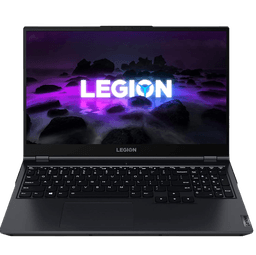
Gaming laptops such as the Lenovo LOQ or HP Victus should only be considered if your coding path specifically involves machine learning, AI, 3D engines, CUDA workflows, or game development. For standard coding and CS coursework, they often add unnecessary weight, heat, and battery compromise.
Operating System Choice Matters More Than Students Think
Hardware is only half the story. The operating system should align with your learning path and future goals.
Windows remains the most flexible for general student workflows because it supports the widest range of software, IDEs, and academic tools. It also pairs well with Windows Subsystem for Linux, which gives students access to Linux-like environments without leaving Windows entirely.
macOS is excellent for backend development, Unix workflows, scripting, and especially iOS development. Its terminal environment feels natural for modern development tools, which is why many professional developers continue to prefer it.
Linux remains highly valuable for backend engineering, DevOps, cloud environments, and systems programming. Students serious about server-side development often benefit greatly from Linux familiarity early in their coding journey.
The Biggest Laptop Buying Mistakes Coding Students Still Make
One of the most common mistakes is buying gaming laptops simply because they appear “more powerful”. For web development, Python, Java, DSA, and computer science fundamentals, this usually creates more downsides than benefits. The extra GPU power rarely contributes to learning, while battery life, portability, and comfort often become worse.
Another major mistake is ignoring upgradeability. A laptop that locks users into 8 GB RAM can become limiting much sooner than expected, especially as projects become more complex. Choosing upgradeable RAM and SSD storage can significantly improve long-term value.
Students also underestimate keyboard comfort and thermals. A laptop that feels fast in a short demo may become frustrating after two-hour coding sessions if the keyboard is poor or the palm rest heats up excessively. Real coding comfort comes from sustained usability, not spec-sheet excitement.
The Top Coding Laptop Picks for 2026
Here are the strongest practical picks for students based on different learning paths.
| Laptop | Best For | Why It Works |
|---|---|---|
| Lenovo ThinkPad T14 | Refurbished value | Excellent keyboard, durable, upgradeable |
| ASUS Vivobook 16 | Balanced new laptop | Great display, lightweight, good CPU |
| MacBook Air M2 | Premium long-term | Best battery, Unix terminal, resale |
| Dell Latitude 7430 | Business reliability | Great build, smooth multitasking |
| Lenovo LOQ 15 | ML and game dev | Dedicated GPU, stronger cooling |
Each of these laptops works because it solves a specific student problem rather than trying to be everything for everyone.
Why the Right Coding Laptop Is a Long-Term Learning Investment
The right coding laptop is not about looking impressive. It is about creating a system that quietly supports thousands of hours of learning without friction. A dependable keyboard, fast SSD, enough RAM, efficient thermals, and stable battery life all contribute directly to better coding consistency.
For most students, the smartest path remains refurbished business laptops, mid-range Windows ultrabooks, or MacBook Air models depending on budget and learning direction. Gaming laptops should remain specialised purchases rather than default recommendations.
A good coding laptop bought in 2026 should confidently support your journey through coursework, internships, projects, hackathons, and even your first job. That is why the smartest buying decision is always the one built around your learning path, not social hype.
Frequently Asked Questions
Q. What is the minimum laptop requirement for coding in 2026?
The safest baseline is a modern Core i5 or Ryzen 5 processor, 16 GB RAM, and 512 GB SSD storage.
Q. Are refurbished ThinkPads good for coding students?
Yes, they remain among the best value coding laptops because of keyboard quality and durability.
Q. Is 8 GB RAM enough?
It works for basic coding, but 16 GB is strongly recommended for long-term comfort.
Q. Should coding students buy gaming laptops?
Only if the focus is machine learning, AI, CUDA, or game development.
Q. Are MacBooks worth it for coding?
Yes, especially for backend, full-stack, Unix workflows, and iOS development.
Q. Which OS is best for coding?
Windows, macOS, and Linux all work well depending on learning goals.
Q. How long should a coding laptop last?
A good laptop should remain useful for 4 to 5 years.
Q. What matters more: processor or keyboard?
Both matter, but keyboard comfort becomes critical over long coding sessions.
Q. Is SSD mandatory?
Yes, SSD should be treated as non-negotiable in 2026.
Q. What is the safest budget category?
Refurbished business laptops remain the best budget choice.
Ready to upgrade your tech?
Browse our collection of quality refurbished products at unbeatable prices.