Apple Folding Phone And Apple’s Reluctant March Toward Foldables
A deep dive into Apple folding phone rumours CES absence foldable technology limits and why Apple continues to wait patiently.

TL;DR Apple has consistently avoided launching a folding phone, even as foldables gain visibility through brands like Samsung and major events such as CES. This hesitation reflects Apple’s broader philosophy of entering categories only when durability, software integration and long term reliability meet strict standards. Foldable phones introduce challenges around hinges, flexible displays, creases, battery life and repairability, all of which conflict with Apple’s emphasis on predictable ownership experiences. While CES showcased foldable innovation, Apple remained silent, reinforcing its wait and watch approach. If Apple eventually launches a folding iPhone, it is likely to be a premium, productivity focused device released only when the form factor feels mature, refined and ready for mass adoption.
Why The Apple Folding Phone Conversation Never Truly Ends?
The idea of an Apple folding phone refuses to disappear because it sits at the intersection of curiosity, frustration, and expectation. Apple is one of the few companies capable of reshaping an entire product category simply by entering it. When Apple stays out of a visible segment for years, as it has with foldable smartphones, the absence itself becomes a signal. Consumers, competitors, and analysts read meaning into that silence. Some interpret it as technical hesitation, others as strategic patience. In reality, it is likely a combination of both.
Foldable phones promise something Apple users understand well: fewer devices doing more meaningful work. Apple has spent years positioning the iPhone as a central computing device and the iPad as a productivity and consumption bridge between phones and laptops. A folding iPhone naturally fits into this philosophy by potentially merging phone and tablet usage into one device. For Indian users who often rely heavily on a single premium device for work, communication, payments, and entertainment, the idea of an Apple foldable is not about novelty. It is about whether Apple can deliver a device that feels refined, durable, and genuinely useful over several years of ownership.
CES Has Ended And Apple Chose Silence Once Again
With CES now concluded and Apple having made no mention of a folding phone, the picture has become more grounded. Apple once again avoided commenting on foldables during a global event filled with foldable phones, flexible displays, and hinge innovations. This outcome aligns with Apple’s long-standing approach to CES. Apple does not treat CES as a product launch stage, particularly for core devices like the iPhone. While Samsung and other Android manufacturers actively use CES to showcase foldable progress, Apple remains an observer rather than a participant.
Apple’s silence should not be confused with indifference. CES functions as a technology showcase where suppliers, component manufacturers, and device makers reveal the state of the art. Apple closely monitors these developments behind the scenes. Samsung’s repeated foldable launches at CES and beyond help Apple evaluate how consumers respond to foldables over time, how durability concerns evolve, and how software maturity progresses. The conclusion of CES without any Apple foldable announcement reinforces the idea that Apple does not yet believe the foldable phone category meets its internal standards for reliability, longevity, and ecosystem cohesion at scale.
Apple’s Philosophy Explains Its Absence From Foldables
Apple rarely enters a category early. Instead, it tends to wait until the technology can support a predictable and repeatable user experience. This philosophy explains why Apple did not launch a stylus until the Apple Pencil felt precise enough, why wireless earbuds arrived when battery life and connectivity were reliable, and why features like high refresh rate displays appeared only when Apple could optimise power consumption and touch responsiveness together. Foldable phones challenge this philosophy because they introduce mechanical complexity into a product Apple markets as dependable and long-lasting.
For Apple, a phone is not a seasonal gadget. It is a daily-use object expected to function consistently for years. Indian buyers, in particular, often hold on to iPhones longer than users in some Western markets, making durability and long-term support even more critical. Foldables, by design, involve moving parts, flexible materials, and layered displays that degrade differently from rigid glass screens. Apple’s reluctance suggests that it does not yet see foldables as offering a sufficiently predictable ownership experience across millions of users.
What A Folding iPhone Would Mean Inside Apple’s Product Line?
A folding iPhone would not exist in isolation. It would have to make sense alongside standard iPhones, Pro models, and iPads. Apple would need to define what role the foldable plays without cannibalising its own lineup in a confusing way. If a folding iPhone opens into a tablet-like display, it begins to overlap with the iPad mini. Apple would then need to justify why users should buy a foldable phone instead of carrying both an iPhone and an iPad, or why the foldable delivers enough unique value to replace that combination.
Apple’s strength lies in clearly defined product roles. The iPhone is personal and always accessible. The iPad is flexible and productivity-oriented. The Mac is for sustained work. A foldable iPhone would blur these boundaries. That does not make it impossible, but it requires careful positioning. Apple would need to ensure that the foldable feels intentional rather than experimental. Samsung, by contrast, has been more willing to let product categories overlap, allowing users to decide how they fit into daily life. Apple’s approach is more prescriptive, which raises the bar for introducing a foldable device.
How Samsung’s Foldables Shape Apple’s Decision Making?
Samsung has effectively become Apple’s real-world testing ground for foldable phones. By launching multiple generations of foldable devices, Samsung has exposed both the potential and the limitations of the form factor. Each generation has improved hinge durability, display quality, and software optimisation, yet user concerns around creases, repairs, and long-term wear persist. Apple can observe how these devices perform over time, how resale values hold up, and how consumers integrate foldables into daily routines.
Samsung’s experience also highlights what Apple would need to outperform. Samsung foldables now feel refined, but they still involve compromises compared to slab phones in terms of thickness, weight, and repair complexity. Apple would not be content with matching Samsung. It would need to exceed the experience in areas Apple users care about most, such as consistency, software polish, and perceived longevity. Samsung’s progress makes it harder for Apple to ignore foldables entirely, but it also raises expectations for what an Apple foldable must deliver to justify its existence.
The Engineering Challenges Apple Cannot Ignore
A folding iPhone would face engineering challenges that go beyond those of a conventional smartphone. The display must survive tens of thousands of folds without degrading visibly or functionally. The hinge must maintain consistent resistance and alignment across years of use. Dust resistance becomes more complex because moving parts create entry points for debris. Battery placement must be carefully balanced across the device to avoid uneven weight distribution or thermal hotspots.
Apple is known for obsessing over tolerances and material behaviour at scale. Foldables complicate this because flexible displays behave differently over time compared to rigid glass. Even small variations in material thickness or hinge alignment can lead to noticeable differences in user experience. Apple’s manufacturing scale magnifies these risks. A design that works well in limited production may reveal weaknesses when produced in the millions. This engineering reality likely contributes significantly to Apple’s decision to wait rather than rush into the foldable phone category.
Durability Expectations Are Higher For Apple Than For Others
Apple’s brand carries an implicit promise of durability, even when devices are thin and complex. iPhones are often passed down, resold, or used well beyond their warranty period. Foldable phones disrupt this expectation because their inner displays are inherently more vulnerable than traditional screens. While Samsung and others have improved protective layers, foldable screens still do not feel identical to rigid glass under a finger or fingernail. Minor dents or pressure marks that would not damage a standard phone screen can leave permanent marks on some foldables.
For Indian buyers, durability concerns are amplified by environmental factors such as dust exposure, heat, and varied usage conditions. A folding iPhone would need to feel resilient in everyday scenarios, not just under controlled testing. Apple cannot afford a perception that its most expensive iPhone is also its most fragile. Until foldable technology can meet Apple’s durability expectations consistently, hesitation remains understandable.
Software Is Where Apple Could Redefine Foldables
If Apple does enter foldables, software will be its most powerful differentiator. Apple already has deep experience designing adaptive interfaces across iPhone and iPad. A folding iPhone could theoretically shift seamlessly between iPhone-style and iPad-style layouts depending on whether it is open or closed. Apps could expand intelligently, multitasking could feel intuitive, and continuity could feel natural rather than forced.
Samsung has made strong progress with multitasking and app continuity on its foldables, but the Android ecosystem still depends heavily on individual developers optimising their apps. Apple’s tighter ecosystem control could allow it to deliver a more consistent experience from day one. However, this also means Apple would need to commit developers to supporting yet another screen size and interaction model. Apple would likely wait until it can provide clear guidelines and strong incentives to ensure that foldable-specific experiences feel first-class rather than transitional.
The Crease Issue And Apple’s Tolerance For Imperfection
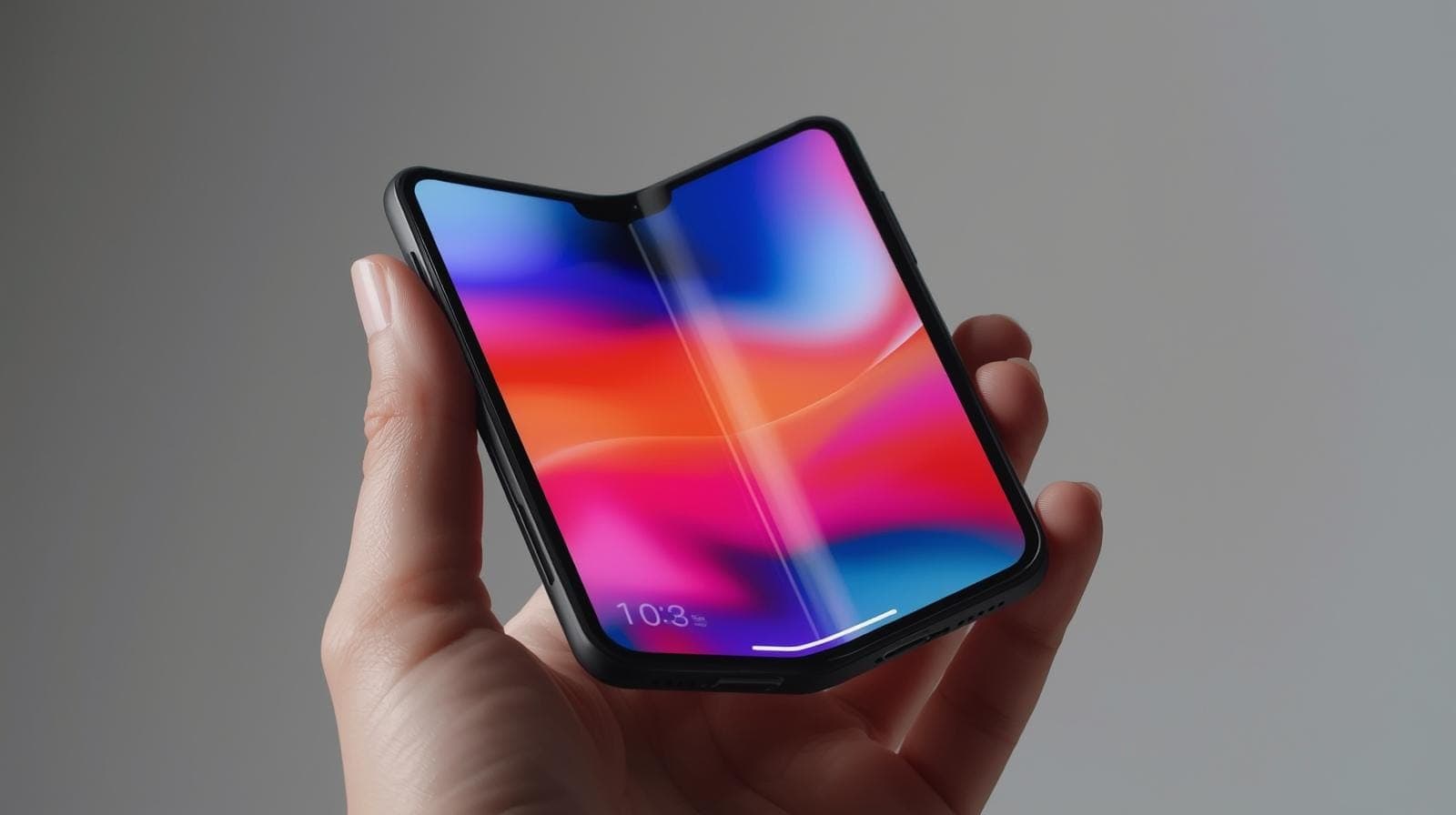
The crease remains one of the most visible compromises of foldable phones. Some users stop noticing it, while others find it distracting, especially during reading or viewing content with bright backgrounds. For Apple, the crease is more than a cosmetic concern. It represents a departure from the clean, uninterrupted surfaces Apple typically favours. Apple’s industrial design language emphasises uniformity and material consistency, which makes the crease a philosophical challenge as much as a technical one.
Samsung has gradually reduced crease visibility, but it has not eliminated it entirely. Apple would likely want the crease to be subtle enough that it does not dominate the experience or raise doubts about durability. If Apple believes that current foldable displays still draw too much attention to the fold line, it may continue to wait. Apple’s history suggests that it is willing to tolerate minor imperfections only when the overall experience outweighs them clearly, something foldables may not yet achieve in Apple’s view.
Battery Life And Thermal Management From Apple’s Perspective
Battery life is a critical part of Apple’s iPhone identity. Users expect predictable, all-day performance under typical usage. Foldables complicate this because they often require multiple battery cells and power-hungry large displays. Managing thermal output becomes more complex when components are spread across two halves of a device connected by a hinge. Heat must be dissipated evenly to avoid discomfort or performance throttling.
Apple’s custom silicon and power optimisation give it an advantage, but physics still imposes limits. A folding iPhone would need to deliver battery life comparable to flagship iPhones despite having a larger display and more complex internals. For Indian users who may not always have easy access to charging during the day, battery reliability matters. Apple would likely delay a foldable launch until it can deliver battery performance that meets or exceeds user expectations rather than asking users to accept compromises for the sake of a larger screen.
Pricing And Positioning Realities In India
If Apple launches a foldable iPhone, it will almost certainly sit at the top of Apple’s pricing ladder. Foldable components are expensive, manufacturing yields are lower, and Apple would position the device as a premium offering rather than a mass-market product. In India, this could place the device well above existing Pro models. The key question is not whether such a device would be expensive, but whether buyers would feel the price is justified.
Apple’s strength in India lies in brand trust, resale value, and ecosystem lock-in. A foldable iPhone could appeal to professionals, business owners, and enthusiasts who already invest heavily in Apple products. However, Indian buyers are also pragmatic. They weigh service availability, repair costs, and longevity carefully. Apple would need to ensure strong warranty coverage and clear repair policies to make a foldable feel like a sensible long-term investment rather than an indulgence.
What Apple Gains By Waiting?
By waiting, Apple gains information, leverage, and stability. It can observe how foldable phones age in the real world, how users actually use them, and which design choices stand the test of time. It can let suppliers refine materials and manufacturing processes while avoiding early adopter backlash. Apple can also shape its eventual entry around lessons learned from competitors’ mistakes rather than repeating them.
Samsung’s early foldables faced criticism around fragility and usability. Later generations improved significantly. Apple can skip those painful iterations and enter when the category is more mature. This strategy has worked for Apple in other areas, even when critics accused it of lagging behind. The risk, however, is that Apple waits too long and allows foldables to become a normal expectation in the premium segment. Balancing patience with relevance is the central challenge Apple faces.
Will Apple Eventually Launch A Folding Phone?
It is unlikely that Apple will permanently avoid foldable phones if the category continues to mature and sustain demand. Foldables align with Apple’s broader goal of making devices more versatile without overwhelming users with complexity. The more refined foldables become, the harder it will be for Apple to justify staying out of the segment entirely. However, Apple’s entry will likely come on its own terms, at a time when it believes the experience can feel cohesive, durable, and worthy of the Apple brand.
The conclusion of CES without any Apple foldable announcement reinforces the idea that Apple does not feel rushed. It is watching, evaluating, and refining its criteria. When Apple does move, it will likely frame the foldable iPhone not as a response to competitors, but as a natural evolution of the iPhone itself.
Why Apple’s Foldable Future Depends on Timing, Not Capability
The real story behind Apple’s absence from foldable phones is not a lack of capability but a question of timing. Apple clearly has the engineering talent, supplier influence, software ecosystem, and silicon efficiency needed to build a foldable device. What it has not yet seen is a version of the category that fully aligns with its standards for durability, battery reliability, display consistency, repairability, and long-term ownership confidence. For a company whose products are expected to last several years and retain resale value, entering too early would create far more brand risk than strategic benefit.
From an India perspective, this patience may actually strengthen Apple’s eventual position. Premium buyers in India do not only look at innovation, they carefully evaluate service support, resale confidence, durability in real-world conditions, and whether the product will remain practical over multiple years of use. A folding iPhone launched before the technology matures could feel exciting at first, but any compromises around hinge wear, crease visibility, battery consistency, or repair cost would quickly undermine the premium trust Apple has built. Waiting allows Apple to enter only when the product feels dependable enough for both aspirational buyers and long-term owners.
If Apple eventually launches a foldable iPhone, it will likely be positioned as a productivity-first premium device rather than a novelty experiment. The winning formula will not be the fold itself, but how seamlessly Apple integrates the larger canvas into iOS, app continuity, multitasking, and its wider ecosystem of iPad, Mac, and cloud workflows. Until that experience feels more refined than today’s foldables, Apple’s wait-and-watch strategy remains less a sign of hesitation and more a reflection of disciplined category timing.
Ready to upgrade your tech?
Browse our collection of quality refurbished products at unbeatable prices.