
HP ZBook Firefly G11: Performance In 2026 CAD, 3D, Rendering, And AI Workloads
HP ZBook Firefly G11 performance reviewed for CAD, rendering, AI workloads, and thin workstation productivity reliability in 2026

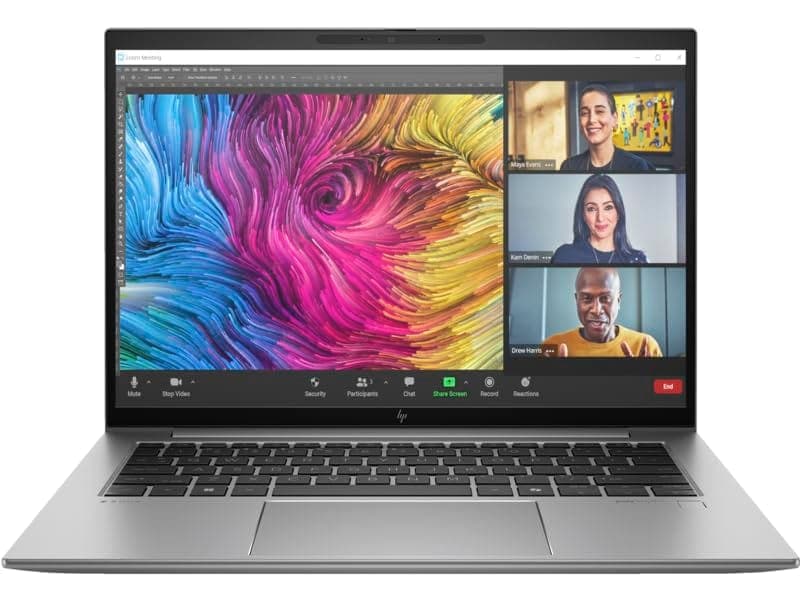
TL;DR In 2026, the HP ZBook Firefly G11 stands out as a thin, professional-oriented mobile workstation that balances portability with dependable performance across CAD, 3D modeling, rendering previews, and AI workloads. Drawing from an advanced architecture built around HP ZBook Firefly G11 Core Ultra processors and modern DDR5 memory, the system pushes beyond the strengths of earlier Firefly models by offering stronger multitasking, improved single-thread and multi-thread compute, and notable enhancements in AI inference capability thanks to on-chip neural acceleration. While the Firefly G11 does not compete directly with heavy mobile workstations featuring high-end discrete GPUs for cinematic rendering or deep learning training, its hybrid CPU design, robust enterprise certification support, and thermal tuning make it a compelling choice for engineers, designers, analysts, and professionals whose daily workflows prioritize consistent productivity and professional software compatibility. In India, refurbished and certified pre-owned units retrieved from enterprise fleet refresh cycles available through trusted platforms such as Refurbo further enhance value by delivering workstation performance at prices that significantly undercut new retail pricing. This article examines how the Firefly G11 handles real-world professional workloads, providing insight into CAD responsiveness, viewport fluidity, rendering behavior, AI workload adaptability, thermal behavior, workstation comparisons, use-case positioning, and practical recommendations for buyers in 2026.
Introduction
The HP ZBook Firefly G11 Workstation Laptop represents the latest evolution in HP’s lineup of lightweight professional notebooks, aimed at delivering reliable workstation performance without the bulk and power demands of larger mobile workstations. This model combines enterprise-grade reliability with balanced hardware designed to serve modern professional needs, including engineering design, data analytics, application development, light rendering, and hybrid AI workloads. Unlike consumer laptops or gaming rigs that prioritize peak benchmarks, the Firefly G11 is built with a focus on predictable behavior, broad ISV certification support, and sustained performance over long work sessions. Users who require consistent responsiveness from tools such as AutoCAD, Fusion 360, MATLAB, or Python-based analytical workloads will find the Firefly’s hybrid architecture and professional firmware tuning particularly beneficial.
In India’s evolving hardware market for 2026, the value proposition for workstation class machines rests increasingly on the availability of professionally refurbished units. High-quality refurbishers rigorously inspect, test, and certify enterprise laptops decommissioned from corporate fleets; this unlocks significant cost savings without sacrificing reliability. Professionals exploring Firefly G11 options can review current refurbished inventory via the Refurbo ZBook collection. These listings often include models with configurations that pair Core Ultra processors, generous RAM, and fast PCIe Gen 4 storage at price points far below new retail.
The core hardware of the Firefly G11 includes hybrid processors that integrate performance and efficiency cores for balanced power distribution, DDR5 memory for improved bandwidth, and PCIe Gen 4 NVMe storage for rapid project loading and file access. Select configurations also offer entry-class discrete GPUs, typically the NVIDIA T500 which provide enhanced viewport responsiveness and modest GPU acceleration in supported professional applications.
Across this article, we assess how the Firefly G11 performs in real-world CAD, 3D modeling, rendering and AI workloads, how its thermal and sustained performance behavior compares to peers, where it fits in thin workstation comparisons, and how buyers should position it within their workflow needs.
CAD Performance
In 2026, the HP ZBook Firefly G11 demonstrated strong performance in computer-aided design (CAD) tasks by leveraging its hybrid Intel Core Ultra architecture, which combines high-performance cores with efficient background cores to manage sustained workloads. This architecture is especially beneficial for professional CAD applications such as AutoCAD, SolidWorks, Fusion 360, and similar design suites used extensively in engineering, architecture, and product design. These applications are heavily dependent on single-thread performance for tasks such as sketching, constraint solving, dimension updates, and model regenerations. The Firefly G11’s hybrid design, with high clock speeds on its Performance cores, ensures these operations remain snappy and responsive even when assemblies become moderately complex.
Memory bandwidth and capacity play a crucial role in CAD responsiveness. With support for DDR5 memory, the Firefly G11 allows larger assemblies and references to be held in memory without excessive paging to disk, which significantly improves interactive performance when model sizes grow. This becomes particularly noticeable in assemblies with hundreds of components or when multiple large parts are open simultaneously. Additionally, the availability of PCIe Gen 4 NVMe SSDs ensures that large project files open quickly and that save operations do not become bottlenecks, a common pain point in high-productivity CAD environments.
Graphics performance in CAD workloads is multifaceted. For 2D drafting and basic 3D views, the integrated Intel graphics, particularly the newer Intel Arc integrated solutions present in many G11 configurations provide adequate viewport interaction. When the machine is configured with a discrete GPU such as the NVIDIA T500, viewport fluidity and smoothness improve further, particularly in shaded, hidden line, or textured modes. While the T500 is not a high-end GPU, its optimized drivers and professional support make it suitable for complex assemblies and larger surface models that would challenge integrated solutions alone.
Another important aspect is driver stability and ISV certification. The Firefly G11 is engineered to comply with professional CAD software certification requirements, which means that the drivers and firmware have been validated to work reliably with major CAD applications. This reduces the likelihood of crashes or graphical anomalies during design iterations, a critical consideration for professional users. The combination of responsive CPU performance, robust memory and storage subsystems, professional graphics support, and certified drivers positions the Firefly G11 as a dependable CAD workstation in 2026, particularly for professionals whose workflows prioritize stability, predictable behavior, and sustained productivity over raw peak performance.
3D Modeling & Rendering Performance
In 2026, the 3D modeling and rendering performance of the HP ZBook Firefly G11 reflects its role as a thin, professional mobile workstation built for balanced workloads rather than extreme GPU rendering. Powered by Intel Core Ultra processors, the system benefits from improved multi-core scaling and higher IPC compared to earlier Firefly generations. For modeling tasks in tools like Blender, Fusion 360, and similar platforms, viewport responsiveness remains smooth for small to mid-sized scenes. Mesh editing, parametric adjustments, surface operations, and assembly visualization perform reliably, especially when adequate DDR5 RAM is configured.
Rendering performance varies significantly depending on whether the system uses integrated graphics or a discrete GPU. With Intel integrated graphics (Arc-based in many G11 units), real-time viewport shading and light preview tasks run adequately, but GPU-intensive ray tracing remains limited. CPU rendering is stable and predictable, leveraging the hybrid architecture effectively, but large animation exports or photorealistic renders will take considerably longer compared to RTX-class GPUs.
Configurations equipped with the NVIDIA T500 offer better viewport fluidity and CUDA compatibility. While the T500 is entry-level compared to RTX workstation GPUs, it improves small-scale GPU rendering, real-time previews, and texture-heavy scenes. However, it is not intended for large cinematic pipelines or production-scale ray tracing.
3D & Rendering Performance Overview
Overall, the Firefly G11 handles modeling efficiently and supports moderate rendering workloads, but it is best positioned for designers who prioritize portability and professional reliability over maximum GPU throughput.
AI Workloads In 2026 (With Discrete GPU Comparison and Future Trends)
In 2026, artificial intelligence workloads span a spectrum from lightweight inference at the edge to full-scale model training in data centers. The HP ZBook Firefly G11 is not designed as a dedicated AI training rig, but its modern architecture makes it surprisingly capable for meaningful professional AI tasks. Central to this capability are HP ZBook Firefly G11 Core Ultra processors, which incorporate built-in neural acceleration alongside traditional performance and efficiency cores. This hybrid design allows the system to handle CPU-based inference, data preprocessing, and lightweight on-device AI workflows more efficiently than older mobile workstations. Tasks such as data cleaning, feature extraction, linear regression, clustering, and small model inference run smoothly within frameworks like scikit-learn, ONNX Runtime, and Python-based ML pipelines. These workloads typically rely more on CPU throughput and memory bandwidth, both of which the G11 delivers thanks to DDR5 support and optimized task scheduling between performance and efficiency cores.
When workloads require GPU acceleration, the picture changes depending on configuration. Intel’s integrated graphics including the newer Arc-based core in many G11 models provide basic hardware acceleration for OpenCL and some AI inferencing libraries, but they lack robust CUDA support required by major deep learning frameworks such as TensorFlow or PyTorch for full GPU-accelerated training. In configurations equipped with discrete GPUs like the NVIDIA T500, CUDA support becomes available, enabling moderate acceleration of training loops, small neural networks, and GPU-based inference tasks. The T500’s professional drivers and optimized ISA allow it to accelerate certain tensor operations and model inference more effectively than integrated solutions, though its VRAM and compute budgets remain modest compared with RTX-class GPUs.
A significant trend in 2026 is the increasing use of hybrid AI workflows in which large models are trained in cloud environments, while local workstations handle preprocessing, inference testing, and model evaluation. Quantization, edge-optimized runtimes, and lightweight neural engines reduce dependency on high-end GPUs, making machines like the Firefly G11 practical for AI development cycles that span edge, desktop, and cloud contexts. For professionals prototyping models, validating inference accuracy, or conducting exploratory analytics on local data, the Firefly G11 offers a balanced mix of CPU and discrete GPU acceleration.
In summary, the Firefly G11 excels in CPU-centric and moderate GPU-accelerated AI tasks, fits well into hybrid training/deployment workflows, and remains relevant in 2026 for data scientists, AI developers, and professionals blending local inference with cloud training.
Thermal & Sustained Load Behavior
The HP ZBook Firefly G11 is engineered as a thin and portable mobile workstation, optimized for professional workloads rather than consumer gaming or ultrabook-style usage. Its thermal design emphasizes sustained performance over brief peak bursts. This is achieved through a combination of dual-fan cooling, heat pipes, and chassis-level airflow optimization, which together maintain CPU and GPU stability under prolonged stress. Unlike ultrathin laptops that throttle aggressively to keep surface temperatures low, the Firefly G11 can sustain extended CAD, rendering, or simulation sessions with minimal performance degradation.
Under continuous CPU-intensive workloads such as compiling large projects, running simulations, or complex spreadsheet calculations the G11’s Intel Core Ultra processors manage to stabilize clocks within safe thermal limits. Performance cores handle heavy multithreaded tasks efficiently, while efficiency cores reduce background power draw, ensuring consistent multitasking responsiveness. Users performing long-duration 2D CAD drafting, coding, or analytics workflows will notice a consistent performance curve without sudden drops common in thinner notebooks.
GPU thermal management is equally deliberate. Models configured with discrete NVIDIA T500 graphics maintain consistent viewport performance and can handle moderate GPU rendering without extreme heat buildup. Extended 3D rendering will still induce clock scaling, but the system balances thermal limits and fan noise effectively, keeping keyboard and chassis temperatures comfortable for desk-based work. Acoustically, fans become audible under sustained load but never reach the disruptive levels of gaming laptops, making the system suitable for quiet office environments, client meetings, or classrooms.
Battery life interacts with thermal tuning; under sustained CPU and GPU load, the G11 typically delivers 5–7 hours of productivity before requiring charging, depending on configuration. This is in line with professional workstation expectations, prioritizing performance stability over extreme battery longevity. Overall, the Firefly G11 prioritizes predictable, repeatable performance during extended workloads, making it ideal for engineers, designers, data analysts, and professionals who rely on consistent output across multiple hours of work rather than short-term benchmark peaks.
Performance Comparison With Similar Thin Workstations
In 2026, the HP ZBook Firefly G11 competes against other premium ultra‑portable mobile workstations that prioritize professional certification, build quality, and balanced performance over outright gaming or heavy GPU brute force. Among its closest peers are the Dell Precision 5480 and the Lenovo ThinkPad P1 Gen 5. While these systems share the same thin and light chassis philosophy, their performance characteristics diverge based on CPU generation, memory architecture, and GPU options. The Firefly G11 stands out primarily due to its HP ZBook Firefly G11 Specs namely the use of Intel Core Ultra processors, higher memory bandwidth through DDR5, and the addition of integrated AI acceleration units that aid certain inference tasks.
In CPU-bound professional workloads such as CAD drafting, 2D/3D modeling, or data analytics, the Firefly G11’s hybrid core design typically outperforms older Precision and ThinkPad configurations that use previous generation hardware. This leads to smoother interactivity in applications like AutoCAD, Inventor, and Fusion 360 when handling mid-sized assemblies or complex sketch constraints. This performance edge is most visible when the workload is tightly coupled with single‑core latency or consistent multi‑thread execution, where the Firefly G11 maintains higher sustained frequencies.
GPU capabilities are where these models diverge more clearly. While the Firefly G11 often ships with integrated Intel Arc or Iris Xe graphics and optional professional T500 variants, both the Precision 5480 and ThinkPad P1 Gen 5 can be configured with more powerful GPUs including discrete RTX A-series or Quadro equivalents. These higher‑end GPUs deliver substantially greater rendering throughput for GPU‑accelerated ray tracing, real‑time global illumination previews, and larger scene render outputs. This advantage becomes apparent in heavy 3D visualization, simulation, and large‑scene rendering. However, these configurations are also heavier, consume more power, and increase thermal complexity, which may not align with every professional’s mobility needs.
Battery endurance is another comparison metric. The Firefly G11, with its efficient thermal strategy and hybrid CPU design, typically achieves longer mixed‑use battery life compared to its peers when under professional productivity workloads. Heat management remains predictable without severe throttling, which benefits long sessions outside of a desk environment. Conversely, mobile workstations optimized for higher GPU TDPs often experience shorter battery life during heavy tasks due to increased power draw.
Thin Mobile Workstation Comparison Table
In daily professional usage, the Firefly G11 delivers balanced performance, efficient thermal behavior, and respectable battery life making it a strong competitor in the thin mobile workstation class, even if it does not match the GPU brute force of thicker, heavier professional machines.
Use Case Recommendation
The HP ZBook Firefly G11 is best suited for professionals who need a balance of portability, sustained CPU performance, and light-to-moderate GPU workloads. Its Intel Core Ultra CPUs and optional NVIDIA T500 GPU make it strong for daily CAD drafting, 2D and light 3D modeling, office productivity, analytics, and AI inference tasks. Heavy GPU rendering, full-scale AI training, or high-end simulation workloads will be better served by thicker mobile workstations with RTX-class GPUs.
For architects, engineers, designers, and consultants who travel or work client-side, the G11 offers a reliable, certified workstation platform without the bulk of traditional heavy-duty machines. Its DDR5 memory and efficient thermal design allow for multitasking, running multiple professional applications simultaneously, and handling moderate datasets without thermal throttling.
The following table provides a practical recommendation based on workload type:
This approach ensures professionals pick the right configuration based on their daily workflow, balancing cost, portability, and professional-grade performance.
HP ZBook Firefly G11 Decision Framework
The HP ZBook Firefly G11 in 2026 is best evaluated through a workflow-first lens rather than raw specs or brand appeal. Its Intel Core Ultra CPUs, DDR5 memory, and optional NVIDIA T500 GPU make it a solid choice for professionals who need sustained CPU performance, light-to-moderate 3D rendering, CAD, and AI inference workflows.
For users whose daily tasks are primarily CPU-bound, such as 2D drafting, programming, data analytics, and financial modeling, the G11 provides excellent value with minimal thermal throttling and good battery efficiency. Professionals who frequently travel or work client-side will benefit from its thin, lightweight chassis without sacrificing workstation-grade reliability.
For GPU-heavy tasks like large-scale rendering, AI model training, or simulation projects, the G11’s thin chassis and entry-level GPU may be limiting. In such cases, a larger workstation with RTX-class graphics is more appropriate.
Pricing decisions should also consider the refurbished market. Quality refurbished G11 units offer nearly identical performance to new models at significantly lower costs, especially for mid-tier workloads like CAD and analytics. New units with premium specs are justified primarily for long-term, multi-year professional use.
| Workload Type | Recommendation | Notes |
|---|---|---|
| 2D CAD / Drafting | Excellent fit | Runs AutoCAD and Inventor efficiently on Refurbished HP ZBook Firefly Models |
| Light 3D Modeling | Good (NVIDIA T500 recommended) | Blender and Fusion 360 small projects perform better on ZBook configurations with NVIDIA T500 |
| Moderate Rendering | Limited | For heavier rendering workloads, consider higher-tier refurbished workstations in the HP ZBook collection |
| Programming and Analytics | Excellent fit | Multiple IDEs, large spreadsheets, and simulations run smoothly on Core i7 and Core Ultra ZBook models |
| AI Inference and Machine Learning | Good (CPU or NVIDIA T500) | Lightweight ML models and inference tasks perform well on high-RAM refurbished ZBooks |
| Heavy GPU Training | Not recommended | Requires RTX A-series class GPU. Explore stronger GPU options in the ZBook workstation range |
| Financial Modeling | Excellent fit | Handles Excel forecasting, simulations, and analytics efficiently on enterprise-grade refurbished ZBooks |
| Client-side Consulting | Excellent fit | Lightweight design, strong battery life, and portability make it ideal. Browse options here: Shop refurbished ZBooks |
This framework allows buyers to select the right configuration based on workload, portability, and budget, ensuring they maximize workstation value without overspending.
Frequently Asked Questions (FAQs)
Q. Is the HP ZBook Firefly G11 suitable for professional CAD workflows in 2026?
A. Yes. The Firefly G11 performs strongly in AutoCAD, SolidWorks, and Fusion 360. Its Intel Core Ultra processors deliver excellent single-thread responsiveness, while DDR5 memory and fast NVMe storage ensure smooth drafting, assembly handling, and project loading.
Q. Can the Firefly G11 handle 3D modeling and rendering tasks effectively?
A. Yes, for light to moderate 3D modeling. Viewport interaction remains smooth, especially with NVIDIA T500 configurations. However, heavy GPU-accelerated rendering and cinematic workloads require RTX-class workstation GPUs.
Q. Is the Firefly G11 good for Blender, Maya, and professional design workflows?
A. Yes. It handles modeling, scene editing, and rendering previews reliably. CPU rendering is stable, and T500 configurations improve GPU-assisted rendering performance for mid-level design workflows.
Q. Does the HP ZBook Firefly G11 support AI and machine learning workloads?
A. Yes. It performs well in AI inference, preprocessing, and model testing. Core Ultra processors include neural acceleration, improving AI efficiency. However, large deep learning training requires stronger GPUs or cloud systems.
Q. How much RAM does the HP ZBook Firefly G11 support?
A. Certain configurations support up to 64 GB DDR5 RAM, significantly improving multitasking, CAD stability, AI workflows, and professional productivity.
Q. Is the Firefly G11 suitable for programming, analytics, and data science?
A. Yes. Its hybrid CPU architecture improves multitasking efficiency, making it ideal for programming, compiling code, data analysis, and running multiple professional applications simultaneously.
Q. How does Firefly G11 compare to Dell Precision 5480 and ThinkPad P1 Gen 5?
A. The Firefly G11 offers newer Core Ultra processors, integrated AI acceleration, and strong thermal stability. Competitors may offer stronger GPUs, but G11 excels in balanced productivity.
Q. Is thermal performance stable during long professional workloads?
A. Yes. The Firefly G11 is optimized for sustained performance. Its cooling system maintains stable clocks during extended CAD, analytics, and programming workloads without aggressive throttling.
Q. Is refurbished HP ZBook Firefly G11 worth buying in India?
A. Yes. Certified refurbished units offer excellent value, delivering workstation-grade performance, enterprise reliability, and significantly lower pricing compared to new retail units.
Q. Who should avoid the HP ZBook Firefly G11?
A. Users requiring heavy GPU rendering, large-scale simulation, or deep learning training should consider RTX-class mobile workstations with higher GPU performance.






